
 Türkçe

Dermapen is a form of treatment applied with a microneedling method that supports the skin renewal and repair process. This procedure increases collagen and elastin production by creating controlled micro-channels in the skin, thereby contributing to skin tightening, tone uniformity, and improvement in its overall appearance.
Dermapen is an effective method in the treatment of acne scars; the stimuli reaching beneath the skin through micro-needles support the restructuring of scar tissue. In this way, smoothness is achieved on the skin surface and color irregularities are significantly reduced. The treatment can be personalized according to the skin type and requires minimal recovery time.
Dermapen application offers anti-aging effects; it helps eliminate signs such as age-related wrinkles, fine lines, and loss of elasticity. Over time, the skin gains a more vibrant, hydrated, and plump appearance. With regular sessions, the biological renewal process of the skin accelerates and a natural rejuvenation effect is achieved.
The safety and effectiveness of Dermapen treatment can be increased under dermatological supervision. The single-use nature of sterile needles prevents the risk of infection. After the application, protection from the sun and the use of suitable moisturizers support the healing process; this allows long-term and lasting results to be obtained.
| What You Need to Know | Information |
| What Dermapen is | Dermapen is a minimally invasive procedure that opens numerous micro-holes vertically on the skin surface with a microneedle device, triggering skin renewal and collagen production. |
| Mechanism of action | The micro-channels created in the skin during the application initiate the body’s natural wound healing process. In this process, fibroblasts are activated, collagen and elastin production increases, and skin tightening and renewal are achieved. |
| In which conditions it is used | It is effective for fine lines and wrinkles, acne scars, enlarged pores, uneven skin tone, loss of elasticity, sun damage, stretch marks, and mild scars. |
| Method of application | The Dermapen device is equipped with sterile and individually used disposable microneedles. Controlled micro-traumas are created on the skin surface and serums or supportive products can be applied to the treatment area. |
| Number of sessions and intervals | Generally 3–6 sessions are recommended. There should be an average of 3–4 weeks between sessions. The total number of applications is planned individually according to the skin problem and treatment goals. |
| Application duration and post-procedure | The procedure takes an average of 20–40 minutes. Afterwards, mild redness, sensitivity, and sometimes peeling may be seen on the skin for a few days. It usually passes within 24–72 hours. |
| Advantages | It is a non-surgical procedure. It temporarily opens the skin barrier and increases the absorption of active substances. Since skin renewal occurs through a natural process, the improvement in appearance is natural and gradual. |
| Conditions in which it should not be applied | It should not be applied in cases of active infection, active acne, herpes, open wounds on the skin, a history of keloids, bleeding disorders, immunosuppressed conditions, and during breastfeeding. |
| Combinations | It can be applied together with PRP, hyaluronic acid, peptide serums, and vitamin cocktails. The combination can accelerate the healing process in the skin and increase treatment effectiveness. |
| Post-treatment care | Protection from the sun is very important. Makeup should not be applied for the first 48 hours, the skin should be cleansed gently, and it should be supported with recommended moisturizing products. Temporary sensitivity may occur in the skin. |

Specialist Dr. Seval Karasatı
Dr. Seval Karasatı is a dermatology (skin diseases) specialist in Ankara specializing in skin health, hair and nail diseases, aesthetic dermatology, and laser applications. With her scientifically based approach and aesthetic perspective, she offers personalized treatment plans for each of her patients.
In the field of dermatology, Dr. Seval Karasatı specializes not only in common skin problems such as acne, rosacea, eczema, allergic skin diseases, and hair loss, but also in mole monitoring and the early diagnosis of skin cancers. She provides effective solutions to her patients with modern devices and up-to-date treatment methods.
Serving as a dermatology specialist in Ankara, Dr. Seval Karasatı is also experienced in aesthetic dermatology procedures. She applies holistic treatments aimed at skin renewal and rejuvenation with procedures such as fillers, PRP, mesotherapy, gold needle, and laser treatments.
Dr. Seval Karasatı conducts a comprehensive evaluation for each patient and shapes the treatment process according to personal needs. Her goal is not only to treat diseases but also to help achieve a healthy, vibrant, and aesthetically balanced skin appearance.
Create an Appointment
What Is Dermapen?
Dermapen is a microneedling treatment device that triggers the skin’s own renewal mechanism by creating controlled damage on the skin surface with micro-needles. With this method, collagen and elastin production increase, allowing the skin to achieve a tighter, brighter, and smoother appearance. It is an effective option in the treatment of acne scars, fine wrinkles, enlarged pores, and uneven skin tone.
The basic principle of the treatment is based on creating controlled, tiny damage to the upper layers of the skin using sterile and very fine needles. This is an intentional “renewal” signal given to the skin. Think of it this way: when the skin receives these tiny and invisible signals, it immediately initiates the natural wound healing process.
This process activates the skin’s “repair team” and intensively increases the production of two fundamental structural proteins in the area: collagen and elastin. These two proteins are the basic building blocks that provide the skin’s firmness, flexibility, and smooth appearance.
In the past, this procedure was performed with manual rollers (dermal rollers) with fixed needles on them. However, in today’s modern dermatology practice, automatic, pen-like devices such as Dermapen are preferred. These advanced systems allow the practitioner to precisely adjust the needle depth (which layer of the skin will be reached) and speed (the number of micro-channels created per second). This precision has greatly increased both the effectiveness and safety of the treatment compared to older methods.
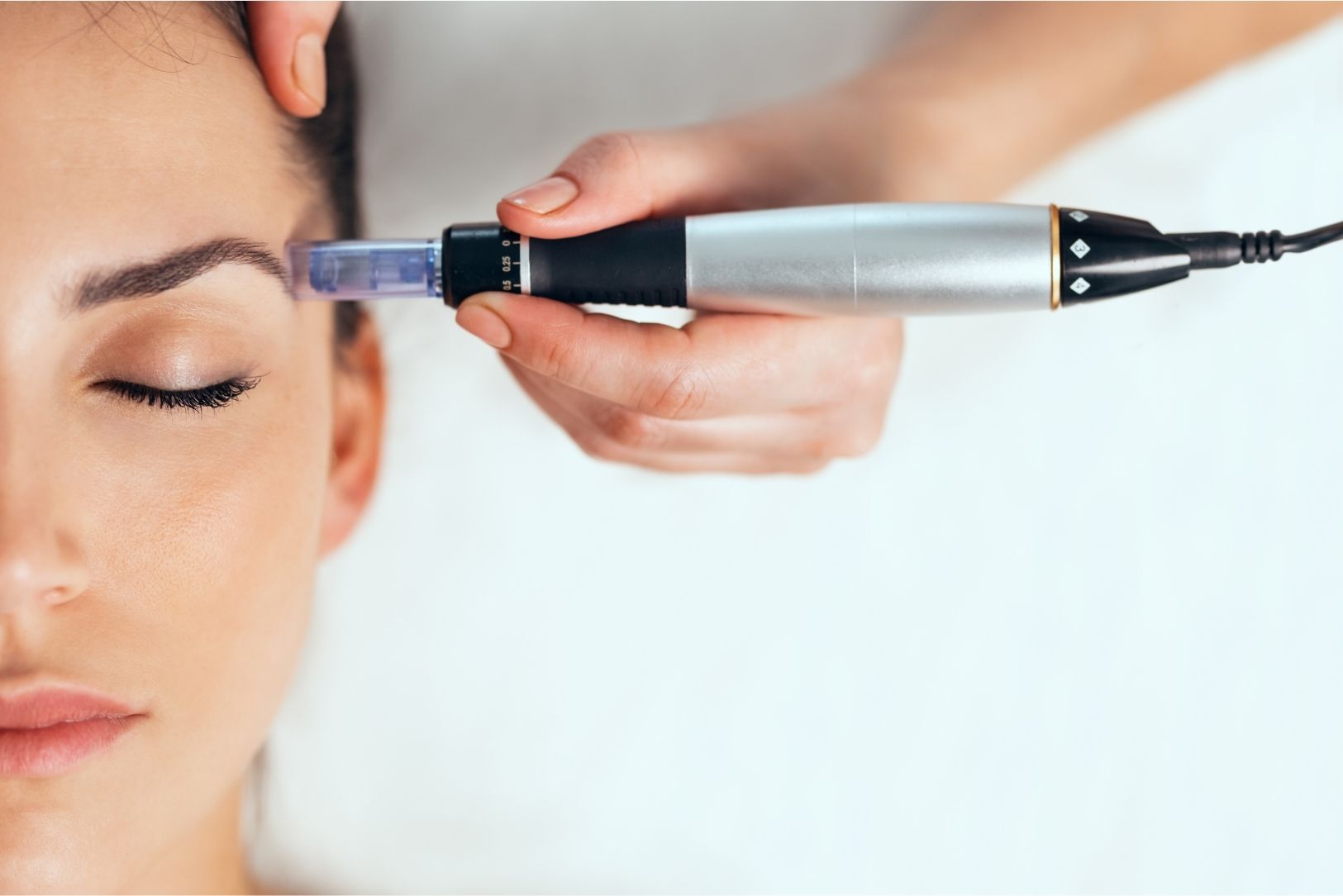
What is the difference between professional Dermapen and home-use devices?
It is very important not to confuse the small needle rollers sold on the market or home-use pens with the professional medical devices used in dermatology clinics. The difference is not only the quality of the device but also the fundamental purpose of the treatment.
Home-use products (which usually have very short needles such as 0.25 mm or 0.5 mm) remain in the uppermost layer of the skin (epidermis). These devices cannot trigger real collagen production. They may increase the absorption of a serum used to some extent, but this is not a “treatment.”
For a real “Collagen Induction Therapy,” in other words, to reach the dermis, which is the “factory” layer that produces collagen in the skin, it is necessary to go deeper. This layer is located beneath the skin.
Professional Dermapen devices use sterile titanium needles and have the ability to precisely adjust the needle depth from 0.5 mm to 2.5 mm (and even deeper in some cases) according to the skin’s needs and the treatment area. For example, the depth required for the treatment of an acne scar and the depth required for fine lines around the eyes are completely different.
Reaching these depths safely and effectively can only be done with medical-grade, approved devices and by trained healthcare professionals.
What are the advantages of Dermapen treatment compared to other methods (laser, peeling)?
Dermapen (Microneedling) has many outstanding advantages, especially when compared to more aggressive methods such as deep chemical peels or ablative laser systems that completely peel the skin.
Its greatest advantage is the speed of return to social life, which we call “recovery time.” After Dermapen, there is usually a slight redness and a feeling of tightness on the skin that lasts 1 to 2 days and resembles a mild sunburn. This is much more comfortable compared to the peeling that can last for weeks after deep chemical peels or the longer recovery times seen with ablative lasers.
The main advantages of microneedling are as follows:
- Fast recovery time (minimal “downtime”)
- Very low side effect profile
- No risk of thermal damage (unlike lasers)
- Can be safely used on all skin types, including dark skin types (risk of discoloration is lower)
- Can be applied to sensitive and thin skin areas such as around the eyes
- Can be easily combined with other treatments (PRP, Mesotherapy)
For these reasons, microneedling is generally one of the preferred first-step, low-risk interventions, especially for improving skin texture and treating scars.
How does Dermapen (Microneedling) repair the skin from within?
What Dermapen does is send thousands of tiny, invisible “signals” to the skin. During the procedure, the multiple needles at the tip of the device rapidly enter and exit the skin, passing through the upper layer of the skin (epidermis) and reaching the lower layer (dermis).
The body perceives this controlled and minimal-level action as an “injury.” However, this is not damage but a stimulus.
This stimulus initiates the skin’s natural repair mechanism, namely the wound healing cascade. Growth factors, which we can think of as the “repair team,” immediately rush to the area. These growth factors give an order to fibroblasts, the skin’s main “factory” cells: “Repair is needed here, immediately produce new building material!”
The job of fibroblasts is to produce new collagen and elastin fibers, which form the structural scaffold of the skin and provide its firmness and flexibility.
This production continues throughout the weeks and months after the treatment. The skin renews itself from the inside out with a stronger, fresher, and healthier tissue. The result is the filling of fine lines, tightening of pores, softening of scars, and an increase in the overall quality of the skin.
Is the effectiveness of Dermapen treatment scientifically proven?
Yes. The effectiveness of microneedling is a structurally proven repair not only through visible external improvement but also under the microscope (histologically). This elevates the procedure from a simple aesthetic application to the level of a measurable medical treatment.
When samples taken from treated tissues are examined, the following significant changes have been observed in the skin structure:
- Healthy thickening of the skin’s protective upper layer (epidermis)
- Increase in the density of the skin’s main renewing cells (keratinocytes)
- Strengthening of the structure (DEJ) connecting the upper and lower layers of the skin (This structure flattens with age, and its strengthening is a sign of rejuvenation)
- Significant increase in collagen fiber density in the lower skin layer (dermis)
- Stimulation of new and healthy blood vessel formation
Most importantly, no permanent scar tissue or abnormal tissue (fibrosis) forms during this repair process. On the contrary, completely healthy and organized tissue remodeling is observed.
Contact Us for Anything You Wonder About Skin Health!
For which acne scars is Dermapen (Microneedling) effective?
Acne scars, especially those in the form of depressions (atrophic), are one of the main targets of Dermapen treatment. Microneedling mechanically breaks down the hardened scar tissue beneath the scar and triggers the production of new, healthy collagen in that area, allowing the scar to “fill in” and reach the same level as the surrounding skin tissue.
However, “acne scar” is a general term, and the success of the treatment depends on adjusting the correct needle depth according to the type of scar. Each scar type requires a different approach. The main targeted atrophic scar types are:
- Ice Pick Scars
- Boxcar Scars
- Rolling Scars
These different scar types mean that there is damage at different depths of the skin. ‘Ice Pick’ scars are narrow but very deep. In ‘Rolling’ scars, the fibrous bands beneath the skin need to be mechanically broken with needles. ‘Boxcar’ scars, on the other hand, are wider depressions. Adjusting the depth and density according to these different scar morphologies with a professional device is the key point of the treatment.
How is Dermapen used for skin rejuvenation and fine wrinkles?
Signs of aging are not only deep wrinkles. Deterioration of the skin’s overall texture, dullness, loss of elasticity (laxity), enlargement of pores, and the prominence of fine lines (rhytides) are also important complaints.
Dermapen is widely used to eliminate this general “skin fatigue” and give the skin a fresher appearance (rejuvenation).
In applications performed for this purpose, needle depths are generally kept at moderate levels (not as deep as in acne scar treatment). The aim is to trigger collagen and elastin production throughout the skin so that the skin tightens itself, improves its texture, and achieves a brighter, healthier structure.
Can Dermapen (Microneedling) treat spots and melasma?
Spot treatment is one of the most interesting and effective areas of use for Dermapen. In this field, a two-way effect is targeted.
First, Dermapen helps pigmented upper skin cells shed more quickly and be replaced with new, spotless cells by accelerating the skin’s renewal cycle.
Second and more importantly, Dermapen opens temporary “micro-channels” on the skin surface. The skin barrier normally prevents most externally applied products from penetrating deeply. However, these micro-channels act as a “transport system” that allows spot-lightening agents (mesotherapy products, Vitamin C, and especially Tranexamic Acid (TXA), etc.), which normally cannot reach the deeper layers of the skin, to reach the target layer where melanocyte cells producing the spot are located.
This combined approach (both mechanical renewal and drug delivery) can provide much superior results, especially in the treatment of resistant sunspots (melasma), compared to cream or peeling treatments alone.
In what other areas is Dermapen used?
The collagen-boosting and absorption-facilitating effect of microneedling makes it a valuable tool for other skin and hair problems as well. The principle of triggering collagen production and increasing product absorption also applies to other parts of the body.
The other main areas in which it is used are:
- Skin Stretch Marks (Striae)
- Hair Loss (Alopecia)
- Surgical or Wound Scars (Scar tissue)
- Treatment of Enlarged Pores
For example, in the treatment of stretch marks, the aim is to trigger the repair of the torn and damaged collagen structure in that area of the skin. In hair loss treatments, it is used to increase blood circulation in the scalp, stimulate the growth factors that nourish the hair follicle, and maximize the absorption of special hair serums such as Minoxidil or PRP.
Who is not suitable for Dermapen treatment?
Although Dermapen (Microneedling) is a very safe procedure, it is not suitable for everyone. In some cases, the treatment is absolutely not performed (absolute contraindication), while in some cases it requires extra caution and evaluation (relative contraindication).
The situations in which the treatment is definitely not performed are:
- Presence of active infection in the treatment area (Herpes, wart, fungus, or bacterial infection)
- Active, inflamed acne lesions in the area (There is a risk of spreading the inflammation)
- Blood clotting disorders or active use of blood thinners (anticoagulants)
- Uncontrolled diabetes (sugar) disease (Wound healing may be impaired)
- A history of forming keloids (abnormal, raised scars)
- Pregnancy and breastfeeding period (Postponed due to hormonal changes and safety reasons)
- Treatments that severely suppress the immune system (Chemotherapy, radiotherapy)
Situations in which the treatment should be carefully evaluated:
- Controlled diabetes
- Severe eczema or psoriasis (Can be performed during the inactive period)
- Tattoo or permanent makeup in the treatment area (It is not applied over it)
How many sessions of Dermapen should be applied and how often?
Microneedling is not a “one-session miracle”; producing new collagen and restructuring itself is a biological process that takes time for the skin. Results are cumulative, meaning they increase with each session by building on the previous one.
Generally, an initial course of at least 3–4 sessions planned at intervals of approximately 3–4 weeks is recommended to achieve the expected result.
This protocol allows the skin sufficient time both to renew itself and to recover for the next session. In more severe cases such as acne scars or deep stretch marks, the number of sessions may increase to 6 or more.
After the desired improvement is achieved in the skin, “booster” or “maintenance” sessions are generally recommended once every 6 months or once a year to preserve the good condition obtained.
Contact Us for Anything You Wonder About Skin Health!
What should be considered before coming to a Dermapen session?
Preparation before the session is important to get the best result from the procedure and minimize the risk. Your dermatologist will give you detailed information, but there are general rules:
The things to be considered before the session are as follows:
- Stopping sunbathing or tanning beds at least 1–2 weeks before the procedure (Performing the procedure on tanned skin increases the risk of discoloration).
- Stopping medications and supplements that have a blood-thinning effect (such as Aspirin, fish oil, Vitamin E, some painkillers) a few days in advance by consulting the doctor (To reduce the risk of bleeding and bruising).
- Coming on the day of the procedure with clean skin, without applying makeup, perfume, or heavy moisturizers to the skin.
- Postponing the procedure and informing your doctor if you have an active cold sore (herpes).
When you arrive at the clinic before the procedure, your skin will be completely cleansed and a topical anesthetic cream will be applied to the area to ensure comfort. This cream is left on for approximately 30–45 minutes. In this way, the discomfort felt during the procedure is minimized.
Does the Dermapen procedure hurt and how is it performed?
Thanks to the anesthetic cream, the procedure is generally not described as “painful.” Most patients describe the procedure more as a “mild vibration,” “tickling,” or the feeling of an “electric brush moved over the skin.” Sensitivity may increase somewhat in areas with thinner skin such as the forehead or over bone, but it is generally very well tolerated.
During the application, the skin surface is kept constantly moist with special, sterile solutions that allow the device to glide comfortably and also nourish the skin. This solution is selected according to the skin’s needs.
The sterile, disposable needle tip of the Dermapen device allows thousands of controlled micro-channels to be opened by making passes in different directions over each area of the skin (horizontal, vertical, and diagonal). A more intensive technique called “stamping” can be used on specific points such as deep acne scars.
Why are PRP or special serums used together with Dermapen?
You can think of Dermapen on its own as a “collagen trigger.” However, combining it with PRP (Platelet-Rich Plasma) or special mesotherapy serums (such as hyaluronic acid, vitamins, amino acids) creates “synergy” in the treatment and takes the results to the next level.
Why? Because those thousands of micro-channels opened by the needles temporarily (only for a few hours) overcome the skin barrier.
This creates a “fast passage gate” or “transport system” (Transdermal Drug Delivery) for valuable ingredients that normally remain on the skin’s surface or are absorbed very little to descend directly into the deeper layers of the skin, exactly where they are needed.
The main supportive products applied to the skin during the procedure are as follows:
- PRP (Plasma rich in growth factors obtained from the person’s own blood)
- PRF (Platelet-Rich Fibrin – a denser form of PRP)
- Pure Hyaluronic Acid (For intense hydration)
- Vitamin C (For brightening and antioxidant effect)
- Tranexamic Acid (For spot treatment)
- Minoxidil or Peptides (For hair treatment)
These rich ingredients make healing much faster and the results much more effective by virtually “nourishing” and “strengthening” the repair process initiated by Dermapen.
How will my skin look after Dermapen (Microneedling)?
Immediately after the procedure, it is very normal and expected for the skin to have noticeable redness and a feeling of tightness resembling a mild sunburn. This shows that the skin’s repair mechanism has started strongly.
The effects that are common after the procedure and completely temporary are as follows:
- Redness (Usually lasts 24–48 hours, sometimes may extend to 72 hours)
- Mild edema (swelling), especially in sensitive areas such as around the eyes
- A feeling of dryness and tightness in the skin (the first few days)
Tiny, pinpoint bleeding during the procedure (especially if worked deeply) (these stop immediately and do not crust)
All of these effects are natural body responses that are part of the healing process and disappear completely on their own within a few days.
Are there risks or serious side effects of Dermapen treatment?
When performed in a professional setting, under sterile conditions, and with the correct technique, Dermapen is an extremely safe procedure. The rapid closure of the micro-channels within a few hours keeps the risk of infection very low.
However, as with any medical procedure, there are potential risks that need to be managed, although rare. These risks usually arise from inappropriate application or inadequate post-procedure care:
- PIH (Post-Inflammatory Hyperpigmentation)
- Infection
- Allergic Reaction (Against the serums used)
- Scarring
Among these risks, PIH, meaning post-procedure discoloration, is the most frequent one that requires attention. It may occur especially in dark skin types or when meticulous protection from the sun is not followed after the procedure. Applying more trauma to the skin than necessary also increases this risk.
Infection and scarring, on the other hand, are very rare situations that may be seen when sterilization rules are not followed or when the procedure is performed carelessly on people with a history of keloids.
What should I pay attention to at home after Dermapen?
The quality of the result obtained from the procedure depends at least as much on how well you follow home care after the procedure as on the procedure itself. Your skin is vulnerable and renewing itself during this process.
The basic rules you should follow are as follows:
- Not letting water touch the skin for the first 24 hours (or not using anything other than the special cleanser recommended by your doctor).
- Absolutely not applying makeup for the first 24–48 hours (Brushes and sponges may harbor bacteria).
- Avoiding activities that cause excessive sweating and increase heat, such as intense exercise, sauna, Turkish bath, and steam bath, for at least 48 hours (preferably longer).
- Not scratching, peeling, or picking at the skin with your hands (There may be slight peeling during the healing process, let it shed on its own).
- Using only the soothing, repairing, and barrier-strengthening products recommended by your doctor (generally those containing hyaluronic acid or calming ingredients) for the first few days.
- Changing the pillowcase with a clean one.
And the most important rule: PROTECTION FROM THE SUN. While the skin is in the renewal process, it is extremely sensitive to UV rays and very prone to discoloration. For this reason, it is mandatory to actively avoid the sun for at least 2–4 weeks after the procedure and to use a high-protection-factor (SPF 50+) broad-spectrum sunscreen every day even if you do not go outside (including rays coming through the window).
Frequently Asked Questions
How does Dermapen work in skin rejuvenation?
Dermapen increases collagen and elastin production by creating controlled damage in the skin with micro-needles. This process triggers skin renewal, tightens pores, and improves overall skin tone.
For which skin problems is Dermapen application effective?
Dermapen is effective in many problems such as acne scars, enlarged pores, fine wrinkles, stretch marks, skin spots, and hair loss. It increases tissue quality and elasticity by initiating the natural repair process in the skin.
How long do redness and sensitivity last after Dermapen?
Mild redness and a feeling of warmth after the application usually decrease within 24–48 hours. Although it varies according to the skin type, the complete healing process is completed within 3–5 days.
Can mesotherapy serum be used together with Dermapen?
Yes, combination with mesotherapy serums is frequently preferred in the Dermapen procedure. In this way, active ingredients reach beneath the skin more easily and treatment effectiveness increases significantly.
Can Dermapen be done during pregnancy or breastfeeding?
Dermapen is not recommended during pregnancy and breastfeeding. Since the skin is more sensitive during these periods, the risk of post-procedure reactions may increase. The postpartum period should be awaited for the application.
What is the difference between Dermapen application and PRP treatment?
While Dermapen stimulates collagen production through mechanical microneedling, PRP provides biological repair with plasma obtained from the patient’s own blood. When the two methods are applied together, the effects may be stronger.
How long do the lasting effects of Dermapen application continue?
The results obtained continue for 6 to 12 months depending on the person. Sessions repeated at regular intervals help preserve skin quality and make the effects long-lasting.
When can makeup be applied after Dermapen?
It is recommended not to apply makeup within the first 24 hours after the procedure. During this period, the skin is in the renewal process and the risk of infection may increase because the pores are open.
What should be considered after the Dermapen procedure?
It is necessary to protect from the sun, keep the skin moisturized, and not use irritating cosmetics. In addition, hot showers, saunas, and steam baths should be avoided for the first few days.
According to what is the number of Dermapen sessions determined?
The number of sessions varies according to the skin problem, age, and skin type. Generally, 4 to 6 sessions are recommended, and an average waiting period of 3–4 weeks is left between each session.