
 Türkçe

Stretch mark treatment is a dermatological procedure aimed at reducing the appearance of linear tears in the skin and increasing skin elasticity. Stretch marks, which usually occur as a result of pregnancy, rapid weight changes, or hormonal factors, may be permanent due to fiber damage in the dermis layer.
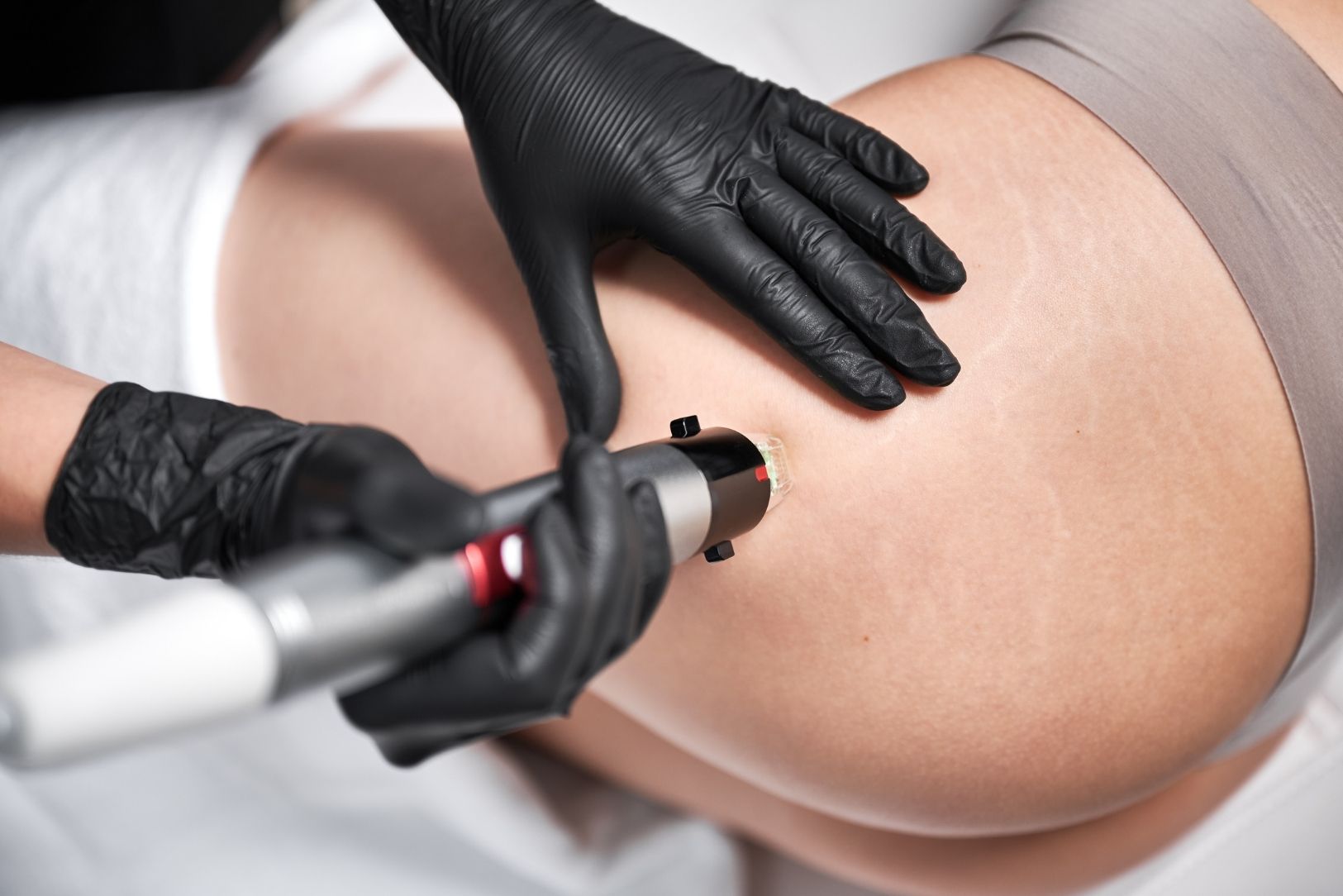
Laser stretch mark treatment stimulates skin renewal, increases collagen production, and repairs skin tissue. Fractional laser systems support healing in the deeper layers while creating minimal damage in the epidermis. This method is planned according to the skin type with different wavelengths.
Microneedling and radiofrequency methods trigger new collagen synthesis by creating micro-damage in the stretch mark area. These treatments provide effective results especially for white stretch marks. The skin renewal process takes a few weeks, and permanent improvement can be achieved with regular sessions.
Topical treatments and medical creams are among the supportive methods. Products containing retinoids, hyaluronic acid, and peptides help prevent the formation of new stretch marks by increasing skin elasticity. The treatment plan should be determined by the dermatologist according to the individual skin structure.
| What You Need to Know | Information |
| What stretch marks are and why they occur | Skin stretch marks (striae) occur when collagen and elastin fibers located in the middle layer of the skin (dermis) tear due to excessive stretching. They are most commonly seen as a result of pregnancy, adolescence, rapid weight gain-loss, or hormonal changes. |
| Types of stretch marks | – Striae Rubrae (red/purple stretch marks): The newly formed stage in which blood vessels are prominent. Their color is vivid, and they respond better to treatment.- Striae Albae (white stretch marks): Stretch marks that have faded over time and blended with the skin color. A slight depression may be felt in the skin. Their treatment is more difficult. |
| Targeted treatment goals | It is generally not possible to completely eliminate skin stretch marks. The aim is to reduce the appearance of stretch marks, smooth the skin surface, increase collagen production, and support skin elasticity. |
| Treatment methods applied | – Fractional laser treatment: Triggers collagen production and is especially preferred for white stretch marks.- Microneedling and microneedle radiofrequency (Golden Needle): Promotes renewal by opening micro-channels under the skin.- Chemical peeling: Supports renewal by peeling the upper skin.- PRP (Platelet Rich Plasma) and biostimulatory injections: Accelerate renewal by using the skin’s own reparative cells.- Topical creams: Products containing retinoids, hyaluronic acid, or herbal ingredients may be supportive. |
| Factors affecting treatment success | – Age of the stretch mark (new ones respond better)- Skin type and elasticity- Treatment method and application frequency- Individual genetic factors |
| Treatment duration and session intervals | Although it varies depending on the method applied, 3–6 sessions are generally recommended. There may be 3–6 weeks between sessions. It may take several months before the effect becomes visibly noticeable. |
| Expectations and limitations | Skin stretch marks cannot be completely erased with any treatment. A noticeable reduction in appearance, evening of skin tone, and improvement in skin texture can be achieved. Especially in older stretch marks, only partial improvement is possible. |
| Preventive measures | Regularly moisturizing the skin, avoiding sudden weight changes, adequate water intake, and a balanced diet can reduce the risk of stretch mark formation. The use of supportive products is recommended during pregnancy or periods of weight gain. |

Specialist Dr. Seval Karasatı
Dr. Seval Karasatı is a dermatology (skin diseases) specialist in Ankara specializing in skin health, hair and nail diseases, aesthetic dermatology, and laser applications. With her scientifically based approach and aesthetic perspective, she offers personalized treatment plans for each of her patients.
In the field of dermatology, Dr. Seval Karasatı specializes not only in common skin problems such as acne, rosacea, eczema, allergic skin diseases, and hair loss, but also in mole monitoring and the early diagnosis of skin cancers. She provides effective solutions to her patients with modern devices and up-to-date treatment methods.
Serving as a dermatology specialist in Ankara, Dr. Seval Karasatı is also experienced in aesthetic dermatology procedures. She applies holistic treatments aimed at skin renewal and rejuvenation with procedures such as fillers, PRP, mesotherapy, gold needle, and laser treatments.
Dr. Seval Karasatı conducts a comprehensive evaluation for each patient and shapes the treatment process according to personal needs. Her goal is not only to treat diseases but also to help achieve a healthy, vibrant, and aesthetically balanced skin appearance.
Create an Appointment
What is a skin stretch mark and why does it occur?
Skin stretch marks are actually a scar beneath the surface of the skin. To understand this better, you can think of the skin as an elastic fabric. The dermis, which is the middle layer of the skin, has a strong support network made up of fibers called collagen and elastin. This network gives the skin its flexibility and durability.
However, if the skin is stretched beyond its elastic capacity and very rapidly, this support network cannot cope. The collagen and elastin fibers weaken and break. While the body tries to repair this internal tear, an unorganized scar tissue replaces the normal skin tissue. The “stretch mark” we see on the surface is actually the outward manifestation of this internal wound.
There can be many common reasons behind this sudden stretching.
- Pregnancy (Especially in the abdomen and breast area)
- Adolescence (Rapid growth in height and body development)
- Rapid weight gain
- Rapid weight loss
- Bodybuilding (Rapid increase in muscle mass)
- Use of cortisone-containing medication or cream (Long-term)
- Some medical conditions (Such as Cushing syndrome)
- Genetic predisposition (If it exists in your family, your likelihood of experiencing it also increases)
What is the difference between red stretch marks and white stretch marks?
We see stretch marks in two different stages, and this distinction is of vital importance in determining the treatment protocol to be applied. Red and white stretch marks are appearances of the same problem at different times.
Characteristics of Red Stretch Marks (Striae Rubrae):
- Early and active stage
- Red, purple, or pink color
- Slightly raised or itchy texture
- Active inflammation
- Dilated blood vessels (This is the reason for the redness)
- The most ideal time for treatment
This stage is the moment when the skin responds like a “fresh” wound and the repair process is active. The main purpose of intervention is to stop this active inflammation, reduce the appearance of blood vessels, and minimize permanent damage by supporting the skin’s repair mechanisms.
Characteristics of White Stretch Marks (Striae Albae):
- Late and mature stage
- White, silvery, or pearly color
- Slightly depressed (atrophic) texture compared to the skin
- Wrinkled or thin surface
- Permanent scar tissue
- Loss of pigment (color)
- More difficult and complex to treat
At this stage, the active inflammation process has ended. The blood vessels have receded, and the pigment (color) cells in the area have disappeared. What remains is an unorganized, depressed scar tissue. Therefore, the treatment aims not only to eliminate redness but also to restructure the skin. The goal is to trigger new collagen and elastin production to fill the collapsed area and improve the skin texture.
What Is Stretch Mark Treatment?
Stretch mark treatment includes procedures aimed at reducing the appearance of fine tears formed on the skin. Although these marks, which usually appear during pregnancy, rapid weight changes, or adolescence, cannot be completely eliminated, they can be significantly reduced. Treatment methods are determined according to the skin type and the stage of the stretch mark.
Common Stretch Mark Treatment Methods:
- Laser Treatment: Increases collagen production under the skin.
- Golden Needle Radiofrequency: Lightens the appearance of stretch marks by renewing the skin.
- Microdermabrasion: Renews the skin by removing dead skin cells.
- Chemical Peeling: Supports the formation of new cells by peeling the skin surface.
- Mesotherapy: Vitamin and medication mixtures are injected under the skin.
- Topical Creams: Products containing retinoids or hyaluronic acid increase skin elasticity.
Are stretch mark creams or chemical peels sufficient on their own?
This is one of the most frequently asked questions by those considering stretch mark treatment. To clarify the answer, it is necessary to understand the role of these methods correctly.
- Retinoid (Tretinoin) Containing Creams:
Retinoids are derivatives of vitamin A and play an important role in skin renewal. Scientific studies show that creams containing tretinoin can provide some benefit in improving the appearance of early-stage red stretch marks. However, when it comes to white, mature stretch marks, the use of these creams alone is unfortunately very insufficient.
Comprehensive analyses have shown that tretinoin alone is one of the lowest-performing options in stretch mark treatment in terms of both clinical effectiveness and patient satisfaction.
This does not mean that these retinoids are completely ineffective. Their real power emerges when they are combined with professional procedures. For example, when used together with energy-based systems such as radiofrequency, they strengthen the skin’s response to treatment. By optimizing the skin’s micro-environment, they maximize the renewal process triggered by the procedures. In other words, they should be considered not as a primary treatment but as a mandatory complementary (adjuvant) treatment.
- Chemical Peeling and Microdermabrasion:
These methods encourage the emergence of a new and fresh skin texture from underneath by peeling the upper layers of the skin in a controlled manner. Peels such as Trichloroacetic Acid (TCA) or Glycolic Acid (GA) are used to renew the skin and trigger collagen production.
However, just like creams, the effect of these superficial procedures on mature stretch marks is limited. They are generally more effective in combination rather than on their own. For example, for red stretch marks, the combination of microdermabrasion with salicylic acid and retinol peel may provide good results. For white stretch marks, microdermabrasion and TCA peel may sometimes be used together with mesotherapy. In more serious cases, combining medium-depth peels with methods such as PRP significantly increases clinical results and patient satisfaction.
In short, although topical creams and superficial procedures may provide some benefit in mild cases or in the early period, they play a “supportive” role alongside the modern technological and injectable treatments that bring the main success in mature stretch marks.
Contact Us for Anything You Wonder About Skin Health!
How do laser technologies improve the appearance of stretch marks?
Lasers are one of the cornerstones of stretch mark treatment. However, there is no single concept as “laser for stretch marks.” The strength of the laser comes from selecting the correct wavelength according to the correct type of stretch mark (red or white) and the patient’s skin type. Different lasers target different layers of the skin and different problems (redness, depression, texture disorder).
Which lasers are used for red (new) stretch marks?
As we mentioned, the target in red stretch marks is to eliminate the excessive vascularization and active inflammation that cause the redness. For this purpose, “vascular,” that is, vessel-focused lasers are used.
The main lasers used in red stretch mark treatment are:
- Pulsed Dye Laser (PDL – 585/595 nm)
- Long-Pulsed Nd:YAG Laser (1064 nm)
Pulsed Dye Laser (PDL) is considered the “gold standard” in this field. The laser light is selectively absorbed by oxyhemoglobin in the blood. In this way, it targets the unnecessary blood vessels within the stretch mark and destroys them, thus rapidly reducing redness and inflammation. As an additional benefit, it has also been observed to stimulate collagen production.
However, PDL has an important limitation: especially in individuals with darker skin tones (Fitzpatrick skin type V-VI), it carries the risk of Post-Inflammatory Hyperpigmentation (PIH), that is, post-procedure discoloration.
This is where the Long-Pulsed Nd:YAG Laser comes into play. This laser is an excellent and safe alternative for dark skin types where PDL is risky. Its 1064 nm wavelength targets vessels while causing less damage to the pigment cells (melanocytes) in the upper layer of the skin. It provides effective results in red stretch marks and the risk of discoloration is much lower.
Which lasers are effective for white (old) stretch marks?
Since white stretch marks are now scars, the goal is not the vessels but restructuring the skin. This is where “fractional” lasers come into play.
Fractional systems deliver laser light not to the entire skin but in tiny columns. While these columns (micro-thermal zones) create controlled damage deep into the skin, they do not touch the healthy tissues in between. These healthy tissues mobilize to rapidly heal the damaged columns, and in this process, a tremendous amount of new collagen (neocollagenesis) is produced. This both improves the texture of the stretch mark and fills the depressed area.
The main fractional technologies used in the restructuring of white stretch marks are:
- Ablative Fractional Laser (CO2 – 10,600 nm)
- Non-Ablative Fractional Laser (1550 nm Er:Glass)
Ablative (Peeling) CO2 Fractional Laser is one of the strongest and best-known methods. It provides powerful renewal by affecting both the upper layer (epidermis) and the lower layer (dermis) of the skin. It is effective, but it is an aggressive method. Its biggest disadvantage is the high risk of PIH (discoloration). Studies show that this risk can reach up to 20%. It also requires pain management, crusting, and an average healing period of 4 days or longer.
The Non-Ablative (Non-Peeling) 1550 nm Er:Glass Laser offers a more modern and safer approach in stretch mark treatment. Its being “non-ablative” means that it delivers its energy directly to the dermis without damaging the uppermost layer of the skin.
Comparative studies have shown that the 1550 nm Er:Glass laser provides clinically much more superior results compared to the CO2 laser. In one study, 84% of patients treated with 1550 nm reported good/excellent improvement, whereas this rate remained only 48% with the CO2 laser. Most importantly, there is safety. The risk of PIH (discoloration) is much lower (approximately 8%) compared to the CO2 laser (20%). This laser is the preferred thermal method in the treatment of white stretch marks in terms of the effectiveness-safety ratio.
Contact Us for Anything You Wonder About Skin Health!
Can the color of white stretch marks be turned back to skin color?
One of the most distinctive features of white stretch marks is that they have lost the pigment (color) cells inside them (hypopigmentation). Even if we restructure them with laser, this whiteness may remain. To solve this problem, repigmentation (re-coloring) treatments are required.
Two main methods used for this purpose stand out.
- Excimer Laser (308 nm)
- UVB/UVA1 Phototherapy
Especially the 308 nm Excimer Laser is a special UVB light source known to be effective in the treatment of white stretch marks (striae alba). By stimulating the dormant pigment cells (melanocytes) in the stretch mark area, it encourages them to produce color again and helps the area approach the surrounding skin color.
Are there modern stretch mark technologies that restructure the skin besides laser?
Yes, there are extremely effective and safe technologies developed especially for dark skin types where lasers may pose a risk of discoloration. These methods stand out by directly targeting the dermis without causing thermal damage to the upper layer of the skin.
- Fractional Microneedle Radiofrequency (FMR / Golden Needle)
This system is also known as the “Golden Needle” and is one of the most powerful weapons in stretch mark treatment. The head of the device contains very fine, gold-coated microneedles that can reach the deep layers of the skin. When these needles reach the dermis, they deliver radiofrequency energy only from their tips.
The energy is delivered directly to the target layer where collagen is produced, without ever touching the surface of the skin (epidermis). This initiates strong heating and restructuring (neocollagenesis) in the dermis without the risk of burns or discoloration on the surface.
Clinical studies have shown that Golden Needle RF provides an improvement similar to the powerful CO2 laser. However, when it comes to safety, FMR is far superior. The risk of developing PIH (discoloration) with FMR is significantly lower compared to the CO2 laser. This feature makes FMR one of the safest and most efficient procedural options especially for individuals with olive and dark skin tones (Fitzpatrick III-VI). The recovery time is also much shorter compared to lasers.
- Mechanical Microneedling (MN / Dermapen)
Microneedling is a method that mechanically stimulates the skin, applied with devices such as “Dermapen.” The device opens thousands of controlled micro-holes in the skin with its many fine needles at the tip. The body perceives these micro-wounds as “damage” and initiates an intense wound-healing response in the area. This response triggers the production of new collagen and elastin.
No thermal (heat) energy is used in this method. The damage is entirely mechanical. Therefore, the risk of PIH (discoloration) is extremely low, and it can be used safely even in the darkest skin types. Although it is effective even on its own, its real power emerges when combined with the injection methods that we will mention in the next step.
What do injection methods and biostimulators do in stretch mark treatment?
In mature, depressed (atrophic) white stretch marks, the most advanced approach is not only to peel or heat the skin from the outside but also to refill and repair it from the inside. These methods are called “biostimulators” because they stimulate the skin’s own repair mechanisms.
There are three main treatment agents that stand out in this group.
PRP (Platelet-Rich Plasma)
Biostimulators (Calcium Hydroxyapatite – CaHA)
Hyaluronic Acid (HA) Complexes
- PRP (Platelet-Rich Plasma):
It is a plasma obtained from the person’s own blood, rich in reparative cells called platelets and growth factors. When injected into the skin or applied through channels opened by microneedling, these concentrated growth factors strongly trigger the formation of new collagen and elastic fibers. It has been proven that PRP alone is much more effective than retinoid creams (86.6% improvement compared to 60%). However, its real power emerges when combined with procedures such as Fractional Microneedle RF (Golden Needle) or Microneedling (Dermapen).
- Biostimulators (Calcium Hydroxyapatite – CaHA):
This is the most advanced approach that offers a structural solution to dermal atrophy (depression). Calcium Hydroxyapatite (CaHA) is normally a filler material. However, in stretch mark treatment, it is specially diluted and used as a “biostimulator.” Its purpose is not only to give volume but to instruct the skin to produce new tissue.
In a protocol with proven effectiveness; first, diluted CaHA is injected under the stretch marks, immediately followed by Microneedling (MN) to the area, and vitamin C is applied on top. The results of this combined treatment are excellent. In skin biopsies taken from the treated area, it has been histologically confirmed that both the quality and quantity of collagen and elastin fibers increased. This is the most objective evidence showing that the structural disorder underlying the stretch mark has truly been reversed.
- Hyaluronic Acid (HA) Complexes:
Pure hyaluronic acid injections enriched with amino acids, also known as a “youth vaccine,” contribute to reducing the appearance of stretch marks beyond moisturizing the skin by activating the wound healing process and encouraging the formation of new small vessels:
Frequently Asked Questions
Who is suitable for stretch mark treatment?
Stretch mark treatment is generally suitable for people who are bothered by skin stretch marks formed during pregnancy, weight changes, or adolescence. Any individual with a suitable skin structure can benefit from the treatment.
What are the most effective methods in stretch mark treatment?
Laser, golden needle radiofrequency, and PRP and mesotherapy applications are among the most effective methods in stretch mark treatment. These methods significantly reduce the appearance of stretch marks by supporting skin renewal.
How are stretch marks after pregnancy treated?
For postpartum stretch marks, while the stretch marks are still red, laser or golden needle radiofrequency can be applied during the breastfeeding period. Methods such as PRP and mesotherapy can be applied after the breastfeeding period ends. The treatment generally provides noticeable improvement after a few sessions.
Does stretch mark treatment provide permanent results?
Stretch mark treatment significantly improves the appearance of the skin, but it does not eliminate it completely. The permanence of the obtained results can be increased with regular care and healthy lifestyle habits.
How is laser application performed in stretch mark treatment?
In laser treatment, collagen production is stimulated by delivering controlled heat energy to the stretch-marked area. The session duration is generally 30–45 minutes, and 3–6 sessions are applied according to the skin structure.
Can stretch marks formed during adolescence be treated?
Yes, adolescent stretch marks can also be treated. Treatments started in the early period provide faster and more successful results because the skin’s repair capacity is high.
What should be considered after stretch mark treatment?
After the treatment, the skin should be moisturized regularly and protected from the sun. In addition, avoiding excessively hot showers and performing regular skin care support the healing process.
Is stretch mark treatment a painful procedure?
Most stretch mark treatment methods create minimal discomfort. Comfort is increased by applying a local anesthetic cream before the procedure, so the treatment process is generally painless.
According to what is the number of sessions determined in stretch mark treatment?
The number of sessions varies according to the depth, color, and location of the stretch marks. The specialist doctor creates a personalized treatment plan by performing a skin analysis and determines the session intervals.
When can daily life be resumed after stretch mark treatment?
Mild redness and sensitivity may be seen after the treatment, but they usually pass within a few hours. Patients can mostly return to their daily activities on the same day.