
 Türkçe

Molluscum contagiosum treatment aims to eliminate viral skin lesions and prevent transmission. In individuals with a strong immune system, spontaneous healing may generally be seen; however, medical intervention is preferred in cases with cosmetic concerns or risk of transmission.
Among physical treatment methods, cryotherapy, curettage, and laser ablation are the most commonly applied procedures. With these methods, the lesions are directly removed and the spread of the virus is limited. Local irritation may develop after the procedure, therefore dermatological follow-up is recommended.
Among topical treatments, agents containing podophyllin, cantharidin, and imiquimod may be used. These medications stimulate the immune response by targeting virus-infected cells. The duration and dose of application are determined by the dermatologist according to the location of the lesion and the age of the patient.
In immunosuppressed individuals, the treatment process may be longer and more resistant. In these patients, systemic antiviral agents or immunomodulatory treatments may be considered. Hygiene measures, not sharing personal items, and limiting contact are critically important in preventing transmission.
| What You Need to Know | Information |
| What is Molluscum Contagiosum? | Molluscum Contagiosum is a contagious viral infection caused by a virus belonging to the Poxviridae family, characterized by small, dome-shaped, shiny skin lesions with a central depression. |
| Symptoms | The lesions are generally 2–5 mm in diameter, painless, and may sometimes cause itching. Their color may be skin-colored, pink, or white. They are generally seen on the face, neck, armpits, genital area, and trunk. |
| Modes of transmission | It can be transmitted through skin contact, shared items (towels, toys, clothes, etc.), or sexual contact. Scratching or irritating the lesions may cause them to spread to other parts of the body. |
| Those in the risk group | • Children (especially school-age children)• Those with a weakened skin barrier (such as atopic dermatitis)• Immunosuppressed individuals• Those living in communal environments |
| Natural course | In healthy individuals, it can generally heal spontaneously within 6–12 months without requiring treatment. However, in some cases this process may extend up to 1–2 years. |
| Need for treatment | Treatment is not always mandatory. However, treatment is recommended if the lesions are widespread, cause cosmetic discomfort, carry a high risk of transmission, or are seen in immunosuppressed individuals. |
| Treatment methods | • Physical removal of lesions by curettage (scraping)• Cryotherapy (freezing with liquid nitrogen)• Topical antiviral or destructive agents• Laser applications• Special treatments under dermatologist supervision in resistant or widespread cases |
| Preventive measures | Avoid touching lesion areas, do not scratch, do not share personal items with others, and observe hygiene rules in communal areas such as pools and gyms. |

Specialist Dr. Seval Karasatı
Dr. Seval Karasatı is a dermatology (skin diseases) specialist in Ankara specializing in skin health, hair and nail diseases, aesthetic dermatology, and laser applications. With her scientifically based approach and aesthetic perspective, she offers personalized treatment plans for each of her patients.
In the field of dermatology, Dr. Seval Karasatı specializes not only in common skin problems such as acne, rosacea, eczema, allergic skin diseases, and hair loss, but also in mole monitoring and the early diagnosis of skin cancers. She provides effective solutions to her patients with modern devices and up-to-date treatment methods.
Serving as a dermatology specialist in Ankara, Dr. Seval Karasatı is also experienced in aesthetic dermatology procedures. She applies holistic treatments aimed at skin renewal and rejuvenation with procedures such as fillers, PRP, mesotherapy, gold needle, and laser treatments.
Dr. Seval Karasatı conducts a comprehensive evaluation for each patient and shapes the treatment process according to personal needs. Her goal is not only to treat diseases but also to help achieve a healthy, vibrant, and aesthetically balanced skin appearance.
Create an Appointment
What Is Molluscum Contagiosum?
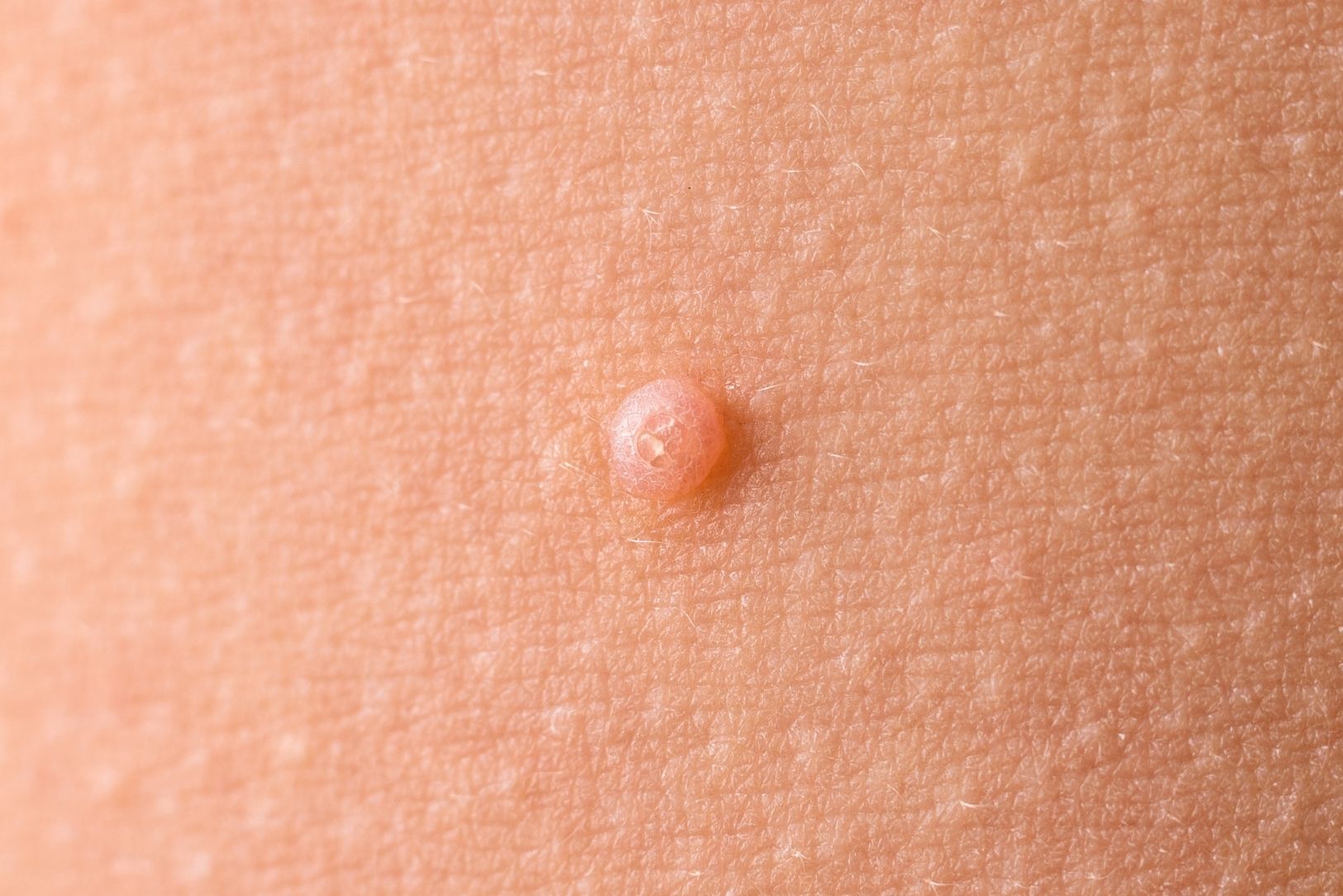
Molluscum contagiosum is a viral skin infection that is frequently encountered worldwide. This infection is caused by a virus called Molluscum Contagiosum Virus (MCV). Clinically, it manifests itself as small, firm, raised bumps (papules) on the skin. These bumps are generally 2 to 6 millimeters in size and can typically be pearly white, pink, or the person’s own skin color.
The most distinctive and diagnostic feature of these lesions is the appearance of a small central depression or “umbilication” at their top. This appearance is a critical sign for confirming the diagnosis during dermatological examination.
Although lesions may appear anywhere on the body, there are areas where they most commonly settle:
The modes of transmission of molluscum contagiosum are as follows:
- Direct skin contact with an infected person.
- Contact with contaminated objects (towels, toys, sports equipment).
- Autoinoculation (self-spread by the person).
Especially the last point, namely autoinoculation, is the main reason why the infection spreads across the body and persists for a long time. Scratching or injuring existing lesions (for example, shaving) carries the virus to healthy areas of the skin and causes new lesions to appear.
Do These Molluscum Lesions Not Go Away on Their Own?
This is one of the most frequently asked questions by these patients, and the answer is yes. In individuals with a healthy immune system (immunocompetent), molluscum contagiosum is generally considered a “benign” and “self-limiting” condition. This means that these lesions will disappear spontaneously over time without any medical intervention.
It takes time for the body to recognize this virus and develop an immune response against it. This natural healing process generally lasts from 6 months to 2 years. In some treatment studies conducted in the past, it was observed that even in placebo groups that received no treatment, approximately 30% of the lesions regressed spontaneously within 10 weeks.
Considering this natural course, in especially asymptomatic (non-itching, non-problematic) and uncomplicated infections, the “observation” or “wait and see” approach is a valid and frequently recommended management strategy. In fact, evidence shows that an active treatment option (creams, freezing, scraping), compared to observation alone, increases the risk of unwanted side effects such as irritation and scarring by approximately four times.
However, this waiting period may not always be an ideal or preferred path, and in some cases it becomes necessary to switch to active treatment.
In Which Situations Does Molluscum Treatment Become Necessary?
Although the observation approach is often preferred, active intervention is definitely necessary when the lesions persist, cause excessive discomfort, carry a high risk of spread, or lead to significant psychosocial or physical discomfort.
In healthy individuals, a single molluscum lesion may last only 6 to 8 weeks. However, the problem is that the virus spreads continuously through “self-inoculation” (autoinoculation). Scratching or rubbing may seriously prolong the duration of the infection. In this case, the lesions may remain persistent for an average of 8 months or even longer. In such cases, early treatment aims to break this self-spreading cycle and shorten the total duration of the infection.
The main clinical conditions requiring active molluscum treatment are as follows:
- A weakened immune system (for example HIV infection or organ transplantation).
- Lesions located in the genital area.
- The presence of accompanying chronic skin disorders such as atopic dermatitis or eczema.
- Lesions causing aesthetic and psychosocial concerns (for example being on the face or visible areas).
- Lesions causing physical discomfort such as pain, itching, or secondary infection.
There is an important distinction here: observation is generally preferred to avoid treatment-related scars. However, lesions that become persistent due to prolonged autoinoculation (scratching) may eventually leave an indented scar (atrophic scar) even when they heal spontaneously.
Therefore, especially when highly controlled methods are used, active intervention (for example laser) can be used not only as a cosmetic procedure but also as a strategy to prevent permanent cosmetic damage that may be caused by prolonged infection and inflammation.
What Are the Physical Methods Applied in the Clinic for Molluscum?
Physical ablative (destructive) techniques offer the fastest way to clear molluscum lesions and are quite effective. However, these procedures generally require application in a dermatology clinic under office conditions. They usually require local anesthesia and careful dermatological technique to minimize post-procedure pain and the risk of scarring.
How Is Cryotherapy (Freezing) Applied in Molluscum Treatment?
Cryotherapy involves the destruction of the affected tissue through local freezing using liquid nitrogen. It is consistently shown among the most effective interventions in the complete clearance of molluscum lesions. Comparative studies show that cryotherapy leads to generally faster resolution of lesions and usually provides clearance within 12 weeks.
The standard procedural technique involves applying liquid nitrogen through a portable spray or cotton swab. The application time generally varies between 5 and 10 seconds per lesion and is usually repeated in one or two cycles. Treatments are generally scheduled at intervals of one to three weeks.
For pregnant patients, mild cryotherapy (especially limiting the freezing time to 2-3 seconds) is considered a safe physical procedure.
Common side effects that may be seen after cryotherapy are as follows:
- Pain during and after the procedure
- Redness
- Irritation
- Localized blistering (bulla)
Is Molluscum Curettage (Scraping Procedure) Painful?
Curettage involves the mechanical scraping of the lesion using a small, sharp, spoon-like instrument called a curette:
Although mechanical removal methods provide highly effective and rapid results in molluscum treatment, they are painful procedures. They also carry the risks of scarring, post-procedural pain, and potential secondary bacterial infection. As a result, pain management is a critical component of the procedure.
Especially in children, it is very difficult for this procedure to be tolerated. For children, applying a topical anesthetic cream (for example EMLA) and covering it (occlusion) 15 to 60 minutes before the scraping procedure has been shown to significantly reduce pain and enable procedural tolerance. This careful approach to pain reduction is not merely an optional comfort measure but a mandatory step for the successful completion of the in-office procedure, especially in pediatric populations.
Contact Us for Anything You Wonder About Skin Health!
Is It a Good Idea to Use Laser in Molluscum Treatment?
Laser therapies, especially Pulsed Dye Laser (PDL) and Carbon Dioxide CO2 laser, represent important alternatives, especially for widespread or treatment-resistant cases. They are generally not positioned as first-line treatments, but they provide excellent results in certain situations.
The 585-nm Pulsed Dye Laser (PDL) is a well-tolerated and rapid treatment that causes the lesions to regress by delivering an intense burst of light to them. When effective treatment parameters are used, clinical studies support high efficacy; one report states that 87 out of 88 lesions resolved completely after a single treatment session.
The greatest clinical benefit of PDL, especially compared with curettage or cryotherapy, is its superior cosmetic safety profile. Reviews regarding the use of PDL for molluscum lesions show that it is specifically a safe, effective, and rapid clearance method that does not cause scarring or permanent pigment changes.
This feature makes PDL not merely a secondary method but the preferred option for patients in whom minimizing long-term cosmetic outcomes is the primary concern (for example lesions on visible areas such as the face, neck, or décolleté).
What Are the Creams and Solutions Used for Molluscum?
Topical agents are widely used and offer both in-office application and patient-applied at-home treatment options. Which agent is selected largely depends on the balance between high efficacy and the known risks of irritation and pigment disorder (dyspigmentation).
Why Is Cantharidin Solution Preferred for Molluscum?
Cantharidin is a topical vesicant (blistering) solution applied only by the doctor in an office setting. It is also known as “beetle juice.” It is used to treat molluscum lesions by creating a mild blister under the lesion, allowing the lesion to separate and fall off naturally within a few days.
Cantharidin is generally the preferred destructive treatment for children because its application is painless. This feature is a tremendous advantage for small children who fear needles or cannot comply with painful procedures (cryotherapy, curettage).
When used with occlusion (covering), clearance rates of up to 42% have been shown. Although the application avoids acute procedural pain, the resulting blistering may lead to complications (excessive enlargement, pain, or infection) in approximately 19% of cases. Post-treatment care requires strict measures.
Are Keratolytic (Tissue-Dissolving) Agents Safe in Molluscum Treatment?
Keratolytic solutions rely on chemical destruction and irritation to clear the affected tissue. These methods are quite effective, but they must be applied carefully to individual lesions and only under doctor supervision.
The two main prominent options in this group are:
- Potassium Hydroxide (KOH)
- Salicylic Acid + Lactic Acid (SAL+LAC)
Potassium Hydroxide (KOH), when used in 10% concentrations, is considered one of the most effective topical agents for complete clearance. It achieved a high complete resolution rate of 87.0%. However, the efficacy of KOH is overshadowed by frequent local side effects. These include severe burning or stinging during application (reported in 48.1% of patients) and a high rate of hypopigmentation (formation of white spots on the skin – affecting 38.8% of patients). Although these post-inflammatory white spots may eventually improve, they pose a serious and long-lasting cosmetic risk, especially in dark-skinned individuals.
The combination of salicylic acid and lactic acid (SAL + LAC), on the other hand, offers an effective chemical alternative. The 16.7% SAL + LAC combination showed equally high efficacy to 10% KOH, reaching a complete resolution rate of 85.1%. The clinical usefulness of this combination has been increased by its reduced side-effect burden; the main reported side effect was desquamation (mild peeling) (23.4%). Since the risk of cosmetically significant and permanent hypopigmentation is considerably lower than that observed with KOH, the SAL and LAC combination generally offers a superior first-line keratolytic option, especially for dark-skinned patients who are prone to severe pigment changes.
Topical retinoids (such as Tretinoin) are also applied nightly until the lesions become inflamed. Although effective, this treatment generally provides slower resolution compared with cryotherapy but has fewer side effects.
Can Podophyllotoxin Cream for Molluscum Be Used at Home?
Podophyllotoxin cream (0.5%) is a topical chemical treatment that can be used safely as home therapy. Given its localized therapeutic effect, it must be carefully applied to each lesion individually.
However, there is a vital warning here: Podophyllotoxin must absolutely not be used during pregnancy (contraindicated) due to the risk of harming the fetus (teratogenic effect).
Contact Us for Anything You Wonder About Skin Health!
Which Immune Treatments Are Used in Resistant Molluscum Cases?
These therapeutic strategies are generally reserved for very widespread and resistant infections, especially in immunosuppressed individuals (for example HIV patients). They have no place in routine treatment.
The main treatments in this group are as follows:
- Imiquimod 5% Cream
- Cidofovir
- Interferon (Injection)
Imiquimod cream triggers the immune system to fight locally. However, its use is not recommended in children. Moreover, comparative reviews show that Imiquimod 5% cream may not be more effective than placebo (inactive cream), yet it still increases the incidence of serious local side effects. Therefore, its use is very limited.
Cidofovir and Interferon, on the other hand, are very powerful antiviral treatments. They may be considered only in hospital conditions for patients with very severe immunodeficiency who do not respond to any other treatment. Due to high cost, the need for special preparation, and serious systemic side effects (flu-like symptoms, depression, lethargy), they are not suitable options for most patients.
Which Drug Used in Molluscum Treatment Was Withdrawn from the Market? (Critical Safety Warning)
In the past, there was an agent called Ingenol Mebutate (Picato gel), which was also used in molluscum treatment. Despite its efficacy, the use of this drug has been discontinued due to critical safety concerns related to long-term malignancy (malignant tumor) risk.
In January and February 2020, regulatory authorities including the European Medicines Agency (EMA) suspended the marketing authorization of this drug. This decision was made following the final results of a 3-year safety study showing a higher incidence of benign and malignant skin tumors associated with the product. The study reported that 3.3% of patients in the Ingenol Mebutate group developed skin cancer, whereas the rate was 0.4% in the comparison group (Imiquimod).
For this reason, dermatologists were clearly instructed to immediately stop prescribing Ingenol Mebutate gel and to use established, safe alternative treatments instead.
What Should Be Considered When Choosing Molluscum Treatment?
Choosing the correct molluscum treatment is a matter of balance. Treatment selection requires balancing the rapid clearance provided by physical methods with higher pain and scarring risks, or choosing effective topical agents while managing the risk of pigment disorders and prolonged treatment duration.
For example, pain management is a critical factor. Procedures such as curettage (scraping) are severe and, especially for children, require mandatory protocols such as anesthetic cream for 60 minutes. In contrast, the advantage of Cantharidin lies in its completely painless application, making it a strategic choice for non-compliant children, even though its overall efficacy is lower than other destructive methods.
The most important distinguishing feature among destructive techniques is the cosmetic outcome. Curettage and cryotherapy (freezing) carry known scarring risks. However, Pulsed Dye Laser (PDL) offers a highly effective method (providing single-session clearance) with almost no risk of permanent pigment change or scarring. For patients who are extremely concerned about cosmetic outcomes (for example the facial area), PDL is the preferred ablative (destructive) technique.
What Are the Final Treatment Recommendations for Molluscum Contagiosum?
The management of molluscum contagiosum goes beyond the “wait and see” advice and requires a personalized approach that takes into account factors such as the patient’s immune status, the location of the lesions, the patient’s age, and psychosocial concerns.
In summary, the key points to remember are as follows:
In patients with immunodeficiency (for example HIV), the priority is the systemic treatment of the underlying condition.
Molluscum lesions detected in the genital area must definitely be treated, and the patient must be screened for other sexually transmitted infections.
In cosmetically sensitive areas (face, neck), the safest and most effective ablative (destructive) method to minimize the risk of scarring is the 585-nm Pulsed Dye Laser (PDL).
Among topical chemical agents, 10% KOH carries a high risk of hypopigmentation (white spots); the 16.7% SAL + LAC combination is a safer alternative with similar efficacy but much lower stain risk.
Patients should not attempt to treat themselves with products such as “solutions” or “acids” obtained from the internet or non-pharmacy channels. These attempts may lead to deep chemical burns and permanent scars.
Agents with critical safety warnings, such as those withdrawn from the market (Ingenol Mebutate – Picato), must absolutely not be used regardless of their efficacy.
Frequently Asked Questions
In which situations is molluscum contagiosum treatment necessary?
Molluscum contagiosum can generally go away on its own; however, treatment is necessary if there is spread, itching, or cosmetic discomfort. Medical intervention is definitely recommended in people with weakened immune systems.
How is molluscum contagiosum treatment applied in children?
In children, treatment is generally done with topical creams, cryotherapy, or curettage. Painless and scar-free methods are preferred. Treatment is individualized according to the child’s age and the number of lesions.
Why does molluscum contagiosum treatment take longer in people with weakened immune systems?
Weak immunity delays the clearance of the virus. In this case, the lesions may become resistant and recur. The treatment process generally requires more frequent control and supportive care.
How effective is cryotherapy in molluscum contagiosum treatment?
Cryotherapy destroys virus-infected cells by freezing the lesions with liquid nitrogen. It is generally effective in 2–3 sessions and carries a low risk of scarring. It is applied safely especially in facial and trunk lesions.
Will there be scars after molluscum contagiosum treatment?
With treatments performed using the proper technique, scarring generally does not occur. However, small color changes may develop after deep scraping or frequent scratching. These marks decrease over time with skin renewal.
How should home care be during molluscum contagiosum treatment?
During the treatment process, the skin should be kept clean, scratching should be avoided, and personal items should not be shared. Antiviral or drying creams used on the doctor’s recommendation may accelerate healing.
Is there a risk of re-transmission after molluscum contagiosum treatment?
Even if treated lesions disappear, the virus may remain on the skin for a while. The risk of re-transmission may be reduced by keeping immunity strong, maintaining hygiene, and observing sexual protection measures.
Is molluscum contagiosum treatment safe during pregnancy?
Medication selection during pregnancy should be made carefully. Topical treatments and cryotherapy are generally safe, but some antiviral agents should be avoided. The treatment plan should be under dermatologist supervision.
When are laser applications preferred in molluscum contagiosum treatment?
Laser is preferred in resistant or cosmetically disturbing lesions. It gives effective results in a short time and removes virus-infected cells without damaging surrounding tissues.
How should skin care be continued after molluscum contagiosum treatment?
After treatment, it is necessary to use moisturizer, protect the skin from the sun, and follow hygiene rules. Strengthening the skin barrier reduces the risk of recurrence and supports aesthetic healing.
How Long Does Molluscum Contagiosum Treatment Take?
Molluscum contagiosum treatment may generally take from a few weeks to a few months. In individuals with a strong immune system, lesions may disappear spontaneously within 6 to 12 months without treatment. In treatments performed with cryotherapy, curettage, or topical medications, the healing period may be shorter.
Which Department or Doctor Should Be Consulted for Molluscum Contagiosum?
The dermatology department should be consulted for the diagnosis and treatment of molluscum contagiosum.
How is molluscum contagiosum treatment for skin diseases performed?
Molluscum contagiosum treatment is planned according to the number and extent of the lesions. A wait-and-see approach, cryotherapy, curettage, or topical treatments may be applied. The aim is to reduce transmission and prevent spread.
How does molluscum contagiosum go away?
In most cases, molluscum contagiosum may disappear spontaneously over months with the immune system. However, medical treatments applied by a dermatologist may be preferred to prevent spread and shorten the process.
How is molluscum contagiosum transmitted?
The disease may be transmitted through direct skin contact, shared towels and items, or from humid environments such as swimming pools. In children, transmission through contact is more common.
How do molluscum contagiosum scars go away?
Scars generally fade over time after the lesions heal spontaneously. Scratching and squeezing increase the risk of scarring. If necessary, scar-removing creams and dermatological applications may be used.
Should molluscum contagiosum be squeezed?
Molluscum lesions should not be squeezed. Squeezing may lead to spread of the infection, scarring, and secondary bacterial infections. Treatment must definitely be done under specialist supervision.
Is molluscum contagiosum dangerous?
Molluscum contagiosum is generally a benign disease and does not pose a life-threatening danger. However, since it is contagious, it may spread if left untreated and cause long-term skin problems.
How is molluscum contagiosum cleaned?
The lesions may be cleaned by a dermatology specialist with curettage, freezing, or chemical agents. Intervention at home is not recommended, and observing hygiene rules reduces the risk of transmission.