
 Türkçe

Acne is a chronic inflammatory disease of the pilosebaceous units, usually beginning during adolescence and developing through the interaction of hormonal, genetic, and environmental factors. The aim of acne treatment is to reduce inflammation, prevent the formation of new lesions, and prevent scar development.
Topical treatment is the first step in mild and moderate acne. Retinoids, benzoyl peroxide, and topical antibiotics (clindamycin, erythromycin) are frequently used. These agents provide effective results by preventing comedone formation and reducing bacterial load.
Systemic treatment may be required in moderate and severe acne cases. Oral antibiotics (tetracycline, doxycycline, minocycline) and hormonal treatments (oral contraceptives, antiandrogens) help lesions regress by controlling seborrhea.
Oral isotretinoin is preferred in treatment-resistant or nodulocystic acne. This medication provides lasting remission by reducing sebum production; however, due to its teratogenic effect, regular laboratory monitoring and pregnancy follow-up must be performed. Supportive laser treatments, gold microneedle radiofrequency, and skin care are decisive factors in the success of treatment.
| What You Need to Know | Information |
| Treatment Area | Dermatology – Acne treatment |
| Targeted Problem | Acne formation caused by overactive sebaceous glands, clogged pores, bacterial infection, and inflammation in the skin |
| Methods Used | Medical treatment (topical and systemic medications), chemical peeling, carbon peeling, skin care, laser treatment, mesotherapy |
| Topical Treatments | Retinoids, antibiotic creams, products containing benzoyl peroxide |
| Systemic Treatments | Oral antibiotics, hormonal treatments (especially in female patients), isotretinoin |
| Skin Care Applications | Pore cleansing, blackhead removal, reduction of sebum that causes acne |
| Chemical Peeling | An application with mild exfoliating acids; it aims to remove dead skin cells and open the pores |
| Carbon Peeling | A laser-based method; it helps regulate the oil balance and reduce inflammation |
| Laser Treatment | Used to reduce acne-causing bacteria and improve redness and scars |
| Mesotherapy | Building resistance against acne by injecting vitamin, mineral, and medication mixtures into the skin |
| Treatment Duration | Varies depending on the patient, the severity of the acne, and the method used; it usually lasts from several weeks to several months |
| Suitability for Treatment | Can be applied to women and men of all age groups experiencing active acne |
| Additional Advantages | Reduction of acne scars, balancing of skin tone, decrease in the appearance of pores |
| Side Effects | May vary depending on the method used; redness, sensitivity, and temporary dryness may occur |
| Follow-up and Control | Regular skin examinations and check-ups are recommended during and after the treatment process |

Specialist Dr. Seval Karasatı
Dr. Seval Karasatı is a dermatology (skin diseases) specialist in Ankara specializing in skin health, hair and nail diseases, aesthetic dermatology, and laser applications. With her scientifically based approach and aesthetic perspective, she offers personalized treatment plans for each of her patients.
In the field of dermatology, Dr. Seval Karasatı specializes not only in common skin problems such as acne, rosacea, eczema, allergic skin diseases, and hair loss, but also in mole monitoring and the early diagnosis of skin cancers. She provides effective solutions to her patients with modern devices and up-to-date treatment methods.
Serving as a dermatology specialist in Ankara, Dr. Seval Karasatı is also experienced in aesthetic dermatology procedures. She applies holistic treatments aimed at skin renewal and rejuvenation with procedures such as fillers, PRP, mesotherapy, gold needle, and laser treatments.
Dr. Seval Karasatı conducts a comprehensive evaluation for each patient and shapes the treatment process according to personal needs. Her goal is not only to treat diseases but also to help achieve a healthy, vibrant, and aesthetically balanced skin appearance.
Create an Appointment
What Is Acne?
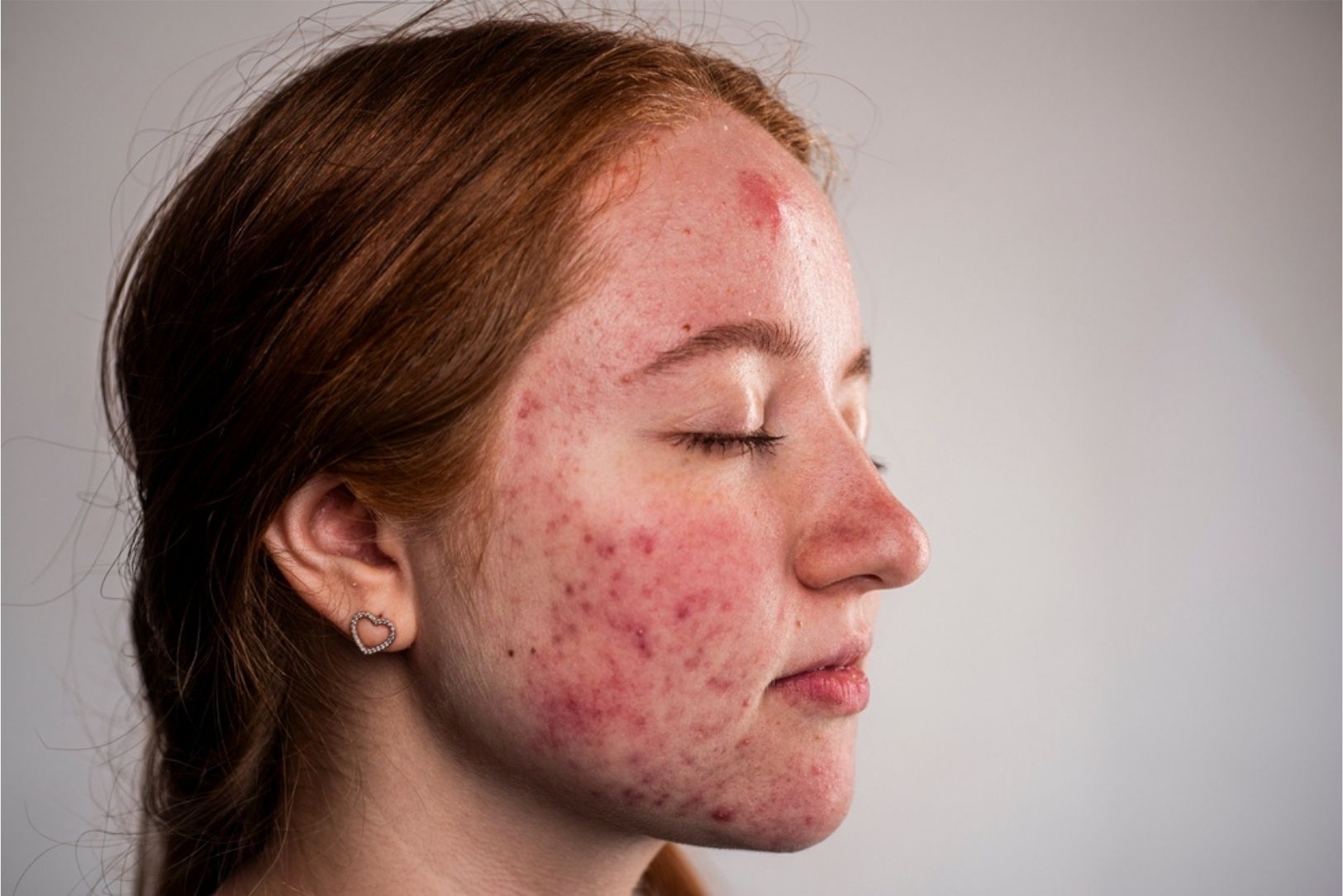
Acne is a common skin disease that occurs as a result of the blockage and inflammation of the sebaceous glands in the skin and progresses with lesions such as blackheads, whiteheads, papules, and pustules. It usually appears during adolescence due to the effects of hormones, but it can be seen at any age. It is more common in areas where sebaceous glands are dense, such as the face, back, and chest. Treatment is planned according to the skin type, the severity of the acne, and its cause.
Why Does Acne Occur?
Acne is a chronic, meaning continuously recurring, inflammatory disease of the hair and sebaceous gland unit, medically called the “pilosebaceous follicle.” It is not just a problem of adolescence; it is one of the most common skin conditions affecting millions of adults worldwide, especially women.
Traditionally, acne was thought to have four main causes.
- Excess sebum (oil) production.
Abnormal keratinization of the follicle (pore canal) (cells sticking together and clogging the canal).
The proliferation of the bacterium called Cutibacterium acnes (formerly P. acnes).
- Inflammation.
However, 2024–2025 data show that this picture is more complex. We now know that inflammation is not a consequence but one of the earliest triggers in the process.
According to the current understanding, the process is not a simple blockage but an inflammatory process triggered by “dysbiosis” (microbial imbalance) and “dysseborrhea” (deterioration in sebum quality). In other words:
- The “bad” strains of C. acnes bacteria on your skin becoming dominant over the “good” strains (dysbiosis).
- The chemical structure of the oil (sebum) produced by your skin changing and becoming more inflammation-triggering (dysseborrhea).
These two conditions activate the skin’s immune system even before there is any follicular blockage, and inflammation begins. This early inflammation both triggers pore clogging and starts a vicious cycle that makes the condition worse.
This new perspective perfectly explains why even non-antibacterial agents alone (e.g., retinoids, spironolactone) or purely anti-inflammatory agents (e.g., dapsone) are so effective in acne treatment. The goal of modern treatment is not to “eliminate” bacteria but to “rebalance” the follicular environment and microbiome.
How Does My Doctor Determine the Severity of My Acne?
In order to make treatment decisions, the current state of the acne must first be classified. Your doctor will make a severity grading based on the type and extent of the lesions by examining your skin. Current guidelines use a practical classification to guide treatment.
The general classification is based on lesion type and extent.
- Mild Acne: A small number of comedones (blackheads/whiteheads) or a few small red bumps.
- Moderate Acne: A higher number of comedones and/or many inflammatory lesions (papules/pustules).
- Severe Acne: A large number of inflammatory lesions, cysts, nodules (deep, painful lumps), and/or significant scar formation.
This classification is critical for doctors to determine the treatment plan. However, every patient is different. Sometimes even acne classified as “mild” may have a “severe” psychological effect on the patient or may tend to leave scars. Therefore, your dermatologist will consider not only the lesions but also the impact of acne on your quality of life, your tendency to scar, and your response to previous treatments, and will choose the most suitable treatment for you.
What Is the General Roadmap of Acne Treatment?
Dermatologists determine the treatment plan according to this severity classification and current international guidelines. The general approach is usually in the form of “step therapy”:
- Mild Acne: Treatment usually begins with topical agents only.
- Moderate Acne: A single cream is usually not enough. At this stage, “fixed-dose combination” creams (containing more than one active ingredient) are preferred. If no response is achieved, a systemic (oral) antibiotic or hormonal agents may be added to the treatment.
- Severe Acne: The cornerstone of treatment is usually Oral Isotretinoin, or strong systemic antibiotics may be used together with fixed-dose combination creams.
Why Are Doctors So Cautious About Acne Antibiotics?
Current AAD 2024 guidelines have made “antibiotic stewardship,” meaning the rational and responsible use of antibiotics, a cornerstone of acne treatment. In the past, prescribing oral antibiotics alone for months for moderate acne was common practice. Current guidelines now define this practice as “substandard care.”
The reason for this is antimicrobial resistance. In other words, antibiotics becoming ineffective against C. acnes bacteria (or other bacteria in your body). This is a serious threat not only for you but for public health as a whole.
There are strict rules for the use of antibiotics in modern acne treatment:
- Monotherapy prohibition (They should never be used alone).
- Benzoyl Peroxide (BPO) requirement (They must be combined with a cream containing BPO to prevent resistance).
- Usage limitation (For the shortest possible time, usually 3–6 months).
- Maintenance treatment (After stopping the antibiotic, treatment should continue with a non-antibiotic cream).
This requirement is also the main reason why the guidelines place increasing importance on non-antibiotic agents such as Spironolactone (a hormonal alternative).
How Do Retinoid Creams, the Cornerstone of Acne Treatment, Work?
Topical retinoids (such as Adapalene, Tretinoin, Tazarotene), which are derivatives of vitamin A, are considered the “first-line treatment” and the “cornerstone of treatment” in acne therapy. The reason they receive a “Strong Recommendation” in the AAD 2024 guidelines is that they act on the basis of acne pathophysiology.
Their most important effect is that they are “comedolytic.” In other words, they normalize abnormal follicular hyperkeratinization (pore clogging). They prevent skin cells from sticking together and accumulating inside the pore, dissolve existing comedones (blackheads/whiteheads), and prevent new ones from forming. They also have strong anti-inflammatory effects:
Because they do not carry a risk of bacterial resistance, they are ideal “maintenance therapy” agents to sustain remission after antibiotic treatment ends.
Adapalene or Tretinoin? Which Retinoid Is Better for Acne?
The clinician’s decision regarding which retinoid to choose is based more on tolerability than efficacy. Numerous scientific studies have shown that the difference in efficacy between different retinoids such as Adapalene 0.1% and Tretinoin 0.025% is minimal or equivalent.
However, there is a significant difference in their tolerability profiles. Evidence shows that Adapalene has a superior tolerability profile among retinoids. Patients using Adapalene reported significantly less redness, scaling, dryness, and stinging/burning compared to those using Tretinoin.
Treatment adherence is the biggest obstacle in the failure of topical acne treatment, and this adherence is often disrupted due to irritation. Therefore, especially in patients with sensitive skin or when starting retinoid therapy for the first time, Adapalene is generally the evidence-based primary choice to maximize treatment adherence.
Contact Us for Anything You Wonder About Skin Health!
Why Are ‘Combination’ (Two-in-One) Acne Creams Preferred?
AAD 2024 guidelines strongly support “fixed-dose combination” treatments that combine multiple mechanisms of action (e.g., pore-opening + antibacterial) as a “Strong Recommendation.”
These combinations (e.g., Adapalene + BPO; Clindamycin + BPO) are much more effective than monotherapy (using a single agent). They also increase treatment adherence by allowing the patient to use a single product per day and facilitate compliance with antibiotic stewardship principles (mandatory use of BPO).
What Role Does Azelaic Acid Play in Acne?
Azelaic acid (AZA) is a versatile agent included as a “Conditional Recommendation” in the AAD 2024 guidelines. It targets multiple aspects of acne pathophysiology.
Azelaic acid is a multi-purpose agent. Its main benefits:
- Comedolytic (pore-opening).
- Anti-microbial (against C. acnes).
- Anti-inflammatory (soothing inflammation).
- Pigmentation (spot) treatment (effective in post-acne spots).
- Relatively safe use during pregnancy.
It is effective in the treatment of mild to moderate acne and papulopustular rosacea. It also has a marked role especially in treating post-inflammatory hyperpigmentation (PIH), meaning the dark spots that form after acne.
What Are New Acne Creams Such as Topical Dapsone and Clascoterone (Winlevi)?
Topical dapsone is an effective topical agent that works primarily through its anti-inflammatory mechanism. The key clinical finding is that dapsone stands out as a targeted treatment for the specific demographic group known as “adult female acne.” Many studies have found that dapsone gel is statistically significantly more effective in female patients than in male patients.
Clascoterone (Winlevi), on the other hand, is the first-in-class topical anti-androgen targeting the hormonal causes of acne. When applied to the skin, it binds directly to androgen receptors in sebaceous gland cells (sebocytes). It directly blocks androgens from triggering sebum production and inflammation at the skin level. It is the first treatment that locally targets the hormonal driver of acne without the systemic side effects of systemic hormonal therapies.
What Is the Difference Between Doxycycline and Minocycline Antibiotics in Acne Treatment?
Tetracycline-class antibiotics (Doxycycline and Minocycline) have formed the basis of moderate-to-severe acne treatment for years. However, the AAD 2024 guidelines make an important distinction between the two: Doxycycline has received a “Strong Recommendation,” while Minocycline has received only a “Conditional Recommendation.”
The reason for this distinction is not a difference in efficacy but a difference in safety profile. Numerous scientific reviews have reported no significant difference in acne treatment efficacy between Doxycycline and Minocycline.
However, Minocycline is associated with rarer but more serious side effects than Doxycycline.
- Risk of autoimmune (lupus-like) syndrome.
- DRESS syndrome (a severe drug reaction).
- Permanent bluish-gray skin discoloration (pigmentation).
- Vestibular (balance) problems and dizziness.
In light of this evidence (equivalent efficacy but significant and unique safety risks), there is no longer a strong evidence-based justification for using Minocycline as the first-line oral antibiotic, and Doxycycline has become the preferred agent.
What Is Different About the New-Generation Acne Antibiotic Sarecycline (Seysara)?
Sarecycline is a new-generation tetracycline included as a “Conditional Recommendation” in the AAD 2024 guidelines and approved for the treatment of moderate to severe acne in patients aged 9 years and older.
What distinguishes Sarecycline from others is that it is a “narrow-spectrum” antibiotic specifically designed for acne. Unlike traditional broad-spectrum tetracyclines, Sarecycline has very little or no activity against commensal (beneficial) Gram-negative enteric bacteria found in the gut.
- Sarecycline is a new-generation tetracycline specially designed for acne.
- It is a “narrow-spectrum” antibiotic.
- It targets only C. acnes and causes less harm to beneficial gut bacteria.
- It protects the gut microbiome better.
- Its efficacy has also been shown for chest and back (truncal) acne.
As a direct result of this “smart” design, Sarecycline has been shown to cause less disruption (less dysbiosis) to the human gut microbiota. This is a very important advantage in the context of the AAD’s strong emphasis on antibiotic stewardship.
Why Has Spironolactone (Aldactone) Become So Popular in Adult Female Acne?
Spironolactone is an anti-androgen included as a “Conditional Recommendation” in the AAD 2024 guidelines, especially used for adult female acne (AFA). Originally a diuretic, this medication blocks androgen (male hormone) receptors in the sebaceous glands, thereby suppressing hormonally driven sebum production.
The role of Spironolactone has evolved rapidly over the past few years. High-impact data from the 2023–2025 period have solidified the place of this agent. The most critical development is that data from the past 1–2 years show that spironolactone may no longer simply be an alternative to strong antibiotics (such as doxycycline), but may actually be more successful than them. A randomized controlled trial presented in 2024 showed that spironolactone was statistically significantly more successful than Doxycycline at 6 months of treatment.
These results indicate that for a female patient with moderate, hormonally driven acne (especially along the jawline), the evidence now supports preferring Spironolactone over Doxycycline. This is also in perfect alignment with antibiotic stewardship goals. At low doses (50–100 mg), it is very well tolerated, and the AAD 2024 guidelines state that frequent potassium monitoring is probably unnecessary in healthy young women.
Contact Us for Anything You Wonder About Skin Health!
Is Oral Isotretinoin (Roaccutane, Zoretanin, etc.) the Strongest Acne Medication?
Yes. Oral isotretinoin is the most effective acne treatment in the dermatology armamentarium and has received a “Strong Recommendation” in the AAD 2024 guidelines.
It is indicated in the following situations:
Severe nodular acne.
Acne resistant to conventional treatments (including systemic antibiotics).
Acne causing significant physical or psychological scarring.
It is the only medication that acts on all four causes of acne at the same time.
It dramatically suppresses sebum (oil) production (shrinks the sebaceous glands).
It normalizes pore clogging (hyperkeratinization).
- It reduces the proliferation of C. acnes bacteria.
It shows a strong anti-inflammatory effect.
What Are the Side Effects and Safety Rules of Isotretinoin Treatment?
Isotretinoin treatment is highly effective but requires careful monitoring. The most common side effects are dose-dependent and manageable.
- Lip dryness (cheilitis) (seen in almost 100% of patients).
- Skin dryness (xerosis).
- Nasal dryness and bleeding.
- Dry eyes.
The relationship of isotretinoin with depression or Inflammatory Bowel Disease (IBD) has long been debated. The AAD 2024 guidelines and a meta-analysis from 2019 state that isotretinoin is unlikely to be associated with neuropsychiatric disorders or IBD. It should not be forgotten that severe acne itself can also cause depression, and treatment generally improves psychosocial status.
The one undisputed and most serious side effect of treatment is TERATOGENICITY. Isotretinoin is a powerful teratogen and can cause serious, life-threatening birth defects. Therefore, female patients of childbearing potential must use highly effective birth control methods and undergo regular pregnancy tests before, during, and after treatment. This is the most critical non-negotiable safety rule of this treatment.
What Is the Emergency Solution for Large, Painful Acne Cysts? (Intra-lesional Injection)
Intra-lesional corticosteroids (ILK) have “Strong Recommendation” status in the AAD 2024 guidelines. This is an “emergency intervention” for acute inflamed, large, painful cysts and inflammatory nodules.
The aim is to provide rapid relief of inflammation (redness, swelling) and pain (usually within 48–72 hours) and to reduce the risk of that lesion leaving a permanent scar. A diluted corticosteroid is injected directly into the lesion with a very fine needle. The most common risk is temporary skin atrophy (indentation) at the injection site, so dosing and technique are very important.
How Are Chemical Peels and Lasers Used in Active Acne Treatment?
Chemical peels are used primarily to manage active acne lesions and post-acne spots (PIH) through their comedolytic (pore-opening) and anti-inflammatory effects.
Salicylic acid (SA) is a lipophilic (fat-soluble) agent. This property allows it to effectively penetrate sebaceous follicles and the lipid-rich environment of comedones. Glycolic acid (GA), on the other hand, is hydrophilic (water-soluble). Comparative studies have shown that SA peeling is preferred for active inflammatory lesions.
Energy-based devices are offered as an alternative or adjuvant to pharmacological treatments.
- Blue/Red Light: Blue (antibacterial), Red (anti-inflammatory).
- Photodynamic Therapy (PDT): Applied with a photosensitizing cream, it destroys C. acnes and targets sebaceous glands.
- Vascular Lasers (PDL, IPL): Target redness and inflammation.
- 1726 nm Laser (New Technology): Selectively targets and shrinks the sebaceous gland directly, mimicking the effect of isotretinoin without systemic side effects.
What Treatments Are Available for the Scars Left After Acne Heals?
Microneedling (Dermapen, etc.) is not a primary treatment for active acne but a popular and minimally invasive treatment for managing atrophic scars (depressed scars) left after acne.
Its mechanism is to provide controlled percutaneous collagen induction (PCI). The needles create micro-injuries in the dermis, which triggers the wound-healing cascade, the release of growth factors, and new collagen production (neocollagenesis).
However, 2024–2025 data clearly show that the best results are achieved not with monotherapy (single treatment) but with combinations.
- Microneedling + PRP
- Laser + Platelet-Rich Plasma (PRP)
- Laser + Filler Injection
- Laser + Chemical Peeling
- Microneedling + Radiofrequency
Your dermatologist will determine the most suitable treatment combination according to the type of your scar (icepick, boxcar, rolling) and your skin structure.
Frequently Asked Questions
Why does acne treatment differ from person to person?
Since the type of acne, its severity, skin structure, and factors such as hormonal status vary from person to person, the treatment plan also differs. Therefore, an individual and targeted approach is required for each patient.
What is the role of hormonal imbalance in acne treatment?
Hormonal fluctuations, especially during adolescence and adulthood, can increase sebum production and cause acne. In hormonal acne, birth control pills or antiandrogen medications may be effective.
How do dietary habits affect treatment success during acne treatment?
High glycemic index foods, dairy products, and processed fats may trigger acne formation. A balanced diet rich in antioxidants can support treatment and reduce inflammation in the skin.
When are chemical peeling and laser applications preferred in acne treatment?
Chemical peeling and laser treatments may be effective in cases where sufficient response cannot be achieved with medication or where there is a risk of scarring. These methods accelerate skin renewal and reduce the appearance of scars.
How should skin care be during acne treatment?
During the treatment process, the skin should be cleansed twice a day with gentle cleansers, non-comedogenic products should be used, and sun protection should not be neglected. Excessively drying products should be avoided.
Who is isotretinoin (Roaccutane) treatment suitable for?
Isotretinoin is recommended in severe nodulocystic acne and in cases where no response is obtained from other treatments. However, careful follow-up is required in terms of liver function tests and pregnancy risk.
Why is psychological support important in acne treatment?
Visible lesions on the skin can affect self-confidence and cause social anxiety. Psychological support helps achieve better results by increasing motivation during the treatment process.
What should be done to prevent scars after acne treatment?
Protecting from the sun during or immediately after treatment, applying peeling or laser procedures to the scarred area, and using skin-renewing creams help prevent scar formation.
When should acne treatment begin during adolescence?
If acne is not controlled at an early stage, the risk of scarring increases. Therefore, when pimples begin to intensify, it is recommended to start appropriate treatment with a dermatologist’s evaluation.
How long do redness and sensitivity in the skin last after acne treatment?
Temporary redness or sensitivity may occur in the skin for several weeks after treatment. Moisturizers that strengthen the skin barrier and sunscreen products help make this process more comfortable.
How Long Does Acne Treatment Take?
The duration of acne treatment varies depending on the severity of the acne, the treatment method used, and the person’s skin structure. Generally, the first results begin to appear within 4 to 8 weeks. However, for permanent and effective improvement, the treatment may need to continue for 3 to 6 months. In some cases, especially in advanced acne, this period may be even longer.
Which department or doctor should be consulted for acne treatment?
The department to consult for acne treatment is dermatology. Dermatologists specialized in skin diseases evaluate the type of acne and create a personalized treatment plan.
How is acne treatment carried out?
Acne treatment is carried out with topical creams, antibiotics, retinoids, or hormone-regulating medications according to the severity of the acne. The goal of treatment is to reduce inflammation, prevent pore blockage, and control the formation of new acne.
How can acne be eliminated?
Completely eliminating acne is possible with regular treatment, proper skin care, and avoiding triggering factors. It is important to be patient because the effects of treatment usually appear within a few weeks and require continuity.
Do acne patches work?
Acne patches can speed up healing by absorbing excess oil and discharge, especially in superficial and inflamed pimples. However, they do not treat the underlying cause of acne and do not provide a permanent solution on their own.
How many hours should an acne patch stay on?
Acne patches should generally remain on the skin for 6 to 12 hours. The patch should be removed when it turns white and absorbs the fluid. Using it for longer may irritate the skin and does not increase the expected benefit.