
 Türkçe

Dry skin treatment aims to restore the skin’s moisture balance and strengthen the epidermal barrier function. The most fundamental approach is the use of moisturizers and establishing appropriate skincare routines. Treatment is supported by identifying the underlying causes.
Among moisturizing products, preparations containing urea, glycerin, ceramide, and hyaluronic acid stand out. These components increase water retention in the skin and reduce transepidermal water loss. Application at least twice a day, especially after bathing, significantly increases effectiveness.
Regulating environmental and lifestyle factors is an important part of treatment. Bathing with excessively hot water and using irritating substances such as detergents or soaps increase skin dryness. Increasing ambient humidity and adequate fluid intake are recommended as supportive measures.
In cases of chronic or resistant dry skin, underlying dermatological diseases should be investigated. If causes such as atopic dermatitis, hypothyroidism, or systemic medication use are identified, a treatment plan is arranged accordingly. In necessary cases, topical corticosteroids or barrier-repairing agents may be used under dermatological supervision.
| Things You Should Know | Information |
| What is dry skin? | Dry skin (xerosis cutis) is a common dermatological condition characterized by tension, flaking, cracking, and itching due to disruption of the skin’s natural moisture and oil balance. |
| Causes | • Cold and dry weather conditions• Frequent and prolonged hot showers• Excessive use of cleansing products such as soaps and detergents that dry the skin• Aging• Skin diseases such as atopic dermatitis and psoriasis• Insufficient water consumption• Certain systemic diseases (thyroid disorders, diabetes, etc.) |
| Symptoms | A feeling of tightness and dryness in the skin, flaking, itching, fine cracks, redness, and sensitivity. In advanced cases, there may be a risk of bleeding or infection in the skin. |
| Treatment methods | • Moisturizing creams suitable for the skin type (especially products containing ceramides, glycerin, urea, or hyaluronic acid)• Applying moisturizer after bathing• Taking short showers with lukewarm water• Using soaps and cleansers that do not irritate the skin• Protecting from external factors that cause dryness• If necessary, topical corticosteroids or therapeutic creams with a dermatologist’s recommendation |
| When should a doctor be consulted? | If dry skin has persisted for a long time, if itching is very severe, if cracking, bleeding, or infection has developed on the skin, or if improvement cannot be achieved despite the products used, dermatological evaluation is required. |
| Prevention and lifestyle recommendations | Regularly moisturizing the skin, avoiding very hot and long showers, limiting the use of soap and detergents, consuming sufficient fluids, maintaining balanced humidity in your environment, and increasing skincare during seasonal transitions are recommended. |

Specialist Dr. Seval Karasatı
Dr. Seval Karasatı is a dermatology (skin diseases) specialist in Ankara specializing in skin health, hair and nail diseases, aesthetic dermatology, and laser applications. With her scientifically based approach and aesthetic perspective, she offers personalized treatment plans for each of her patients.
In the field of dermatology, Dr. Seval Karasatı specializes not only in common skin problems such as acne, rosacea, eczema, allergic skin diseases, and hair loss, but also in mole monitoring and the early diagnosis of skin cancers. She provides effective solutions to her patients with modern devices and up-to-date treatment methods.
Serving as a dermatology specialist in Ankara, Dr. Seval Karasatı is also experienced in aesthetic dermatology procedures. She applies holistic treatments aimed at skin renewal and rejuvenation with procedures such as fillers, PRP, mesotherapy, gold needle, and laser treatments.
Dr. Seval Karasatı conducts a comprehensive evaluation for each patient and shapes the treatment process according to personal needs. Her goal is not only to treat diseases but also to help achieve a healthy, vibrant, and aesthetically balanced skin appearance.
Create an Appointment
What Is Dry Skin?
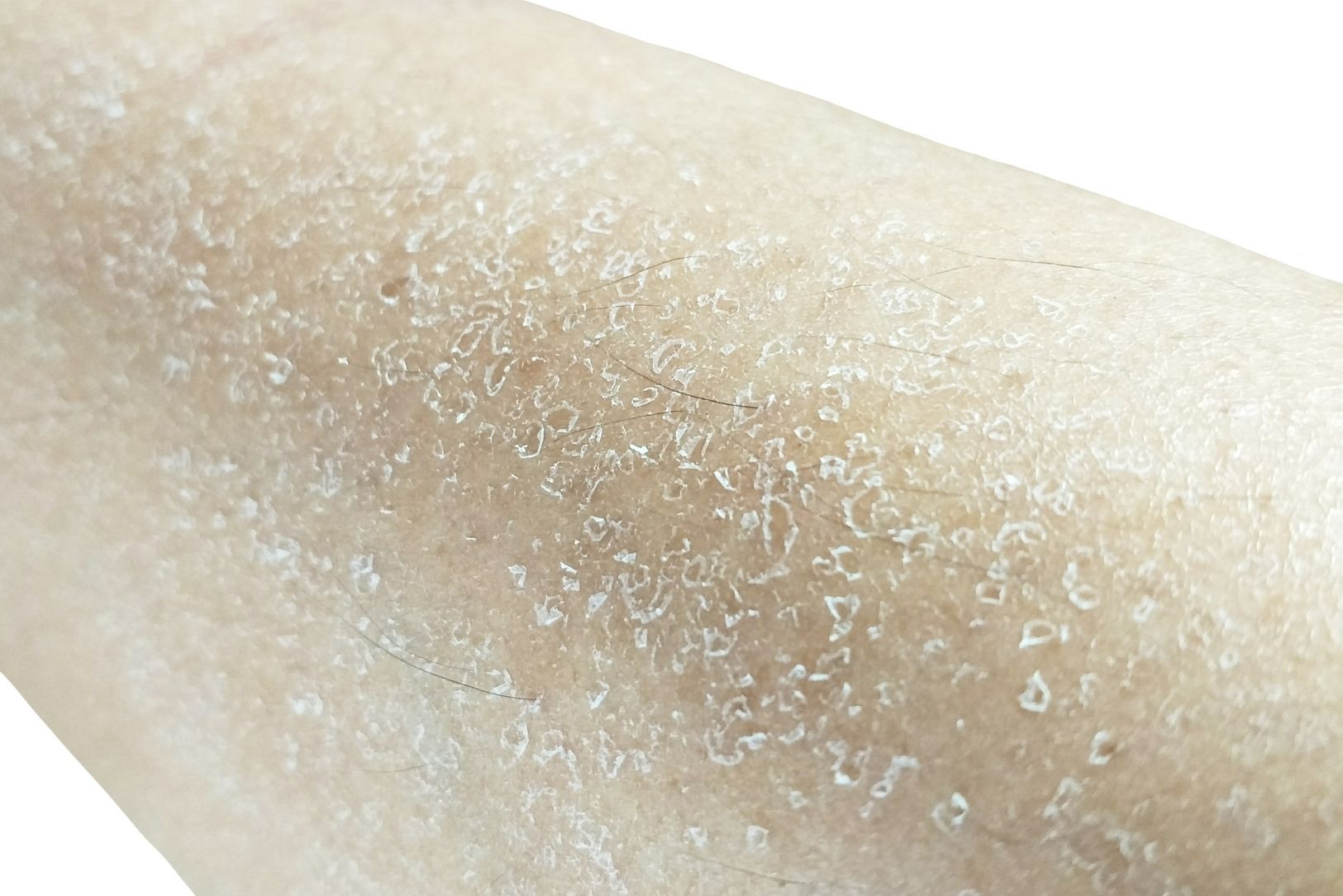
Dry skin is a common skin problem characterized by symptoms such as flaking, tightness, cracking, and itching caused by a lack of moisture on the skin surface. Cold weather, low humidity, excessive bathing, harsh soaps, aging, and certain dermatological diseases can lead to this condition. Regular use of moisturizers, short showers with lukewarm water, and products that strengthen the skin barrier help relieve dryness.
The most prominent symptoms of xerosis include:
- Flaking (dandruff-like shedding)
- Roughness (hardness felt when touched)
- Fine lines or cracks (fissures)
- A feeling of tightness (especially after contact with water)
- Redness and irritation
- Itching (pruritus)
Among these symptoms, itching is perhaps the one that reduces quality of life the most. Itching starts a vicious cycle: as the skin itches, the person cannot resist scratching, scratching causes further damage to the skin’s protective barrier, and this damage increases dryness and therefore itching even more.
What is our skin’s “protective barrier” and what is its relationship with dryness?
To truly understand dry skin, it is necessary to know the structure of the outermost layer of our skin. This structure is best explained by the “brick and mortar” model.
- Bricks (Corneocytes): These are the dead and flattened cells of our skin. Like the bricks of a wall, they provide physical protection.
- Mortar (Lipids): This is the key point. It is a “cement” layer composed of the skin’s natural oils (ceramides, cholesterol, fatty acids) that fills the gaps between the bricks and holds them together.
The “skin barrier function” is related to this “mortar.” This lipid layer performs two vital tasks: it keeps the valuable moisture and water inside and prevents evaporation. It also prevents threats coming from outside, such as allergens, irritating chemicals, and microbes, from penetrating into the deeper layers of the skin.
In dry skin (xerosis), this “mortar” layer is damaged. Lipids decrease, and the bonds between the bricks weaken. The wall cracks and begins to leak. Water inside the skin evaporates uncontrollably and the skin becomes vulnerable.
Why is my skin becoming dry?
Most of the time, dry skin is caused by habits in our daily routine that unknowingly remove the valuable “mortar” layer of the skin.
These external triggers include:
- Cold and dry winter air
- Environments with low humidity
- Air conditioners or central heating systems
- Very frequent bathing or showering
- Bathing with hot water (melts the skin’s oils)
- Harsh, foaming, deodorant, or alcohol-based soaps
- Scrubbing the skin or rubbing with rough towels
- Irritating fabrics such as wool or synthetics
- Unprotected contact with dishwashing detergents or cleaning chemicals
Can dry skin be a symptom of a disease?
Sometimes dryness is not only caused by external factors; it may also be the outward reflection of a systemic condition or physiological change within the body.
Internal conditions that may cause dry skin include:
- Aging (Senile Xerosis): As age increases, the skin’s natural oil (lipid) production slows down, the skin becomes thinner, and its ability to retain moisture decreases.
- Genetic Predisposition: Conditions such as atopic dermatitis (eczema) or ichthyosis (fish-scale disease) cause a congenitally weak skin barrier.
- Diabetes Mellitus: High blood sugar can affect nerves and blood vessels, disrupting the skin’s ability to moisturize itself.
- Thyroid Diseases (Hypothyroidism): Reduced thyroid function slows the skin’s metabolism and leads to a dry, pale, and rough appearance.
- Chronic Kidney Disease: Imbalances in the body’s fluid and mineral balance can affect sweat and oil gland function, causing severe dryness and itching (uremic pruritus).
- Certain Drug Treatments: Some medications such as cholesterol drugs (statins), acne medications (retinoids), or diuretics may cause skin dryness as a side effect.
Is dry skin only an aesthetic problem or should it be taken seriously?
Dry skin usually begins as a discomfort such as itching and tightness. However, if left untreated, especially when there is an underlying disease, it can become more than a simple aesthetic problem.
A damaged skin barrier does not only allow water to escape but also acts as an “open door” allowing external threats (bacteria, allergens) to enter. The microscopic cracks that occur in dry skin become perfect entry points for microbes.
This situation is especially risky for diabetic patients or people with suppressed immune systems. Simple dryness may create the basis for serious complications such as cellulitis (skin infection) or wounds that do not heal. Therefore, managing dryness is also an infection prevention strategy.
What is the first and most important step in dry skin treatment?
The first and fundamental step in treatment is strictly avoiding all possible factors that damage the skin barrier or trigger dryness. This is called non-pharmacological intervention and forms the basis of treatment. Even the most expensive and powerful treatment creams will be ineffective if a person continues to wash their skin every day with hot water and harsh soaps. Without controlling environmental factors and habits, pharmacological treatment will remain incomplete.
Contact Us for Anything You Wonder About Skin Health!
What should correct bathing and shower habits be like?
Water does not moisturize the skin; on the contrary, when it evaporates it takes the existing moisture with it. To minimize this effect, it is essential to reorganize bathing habits.
The rules that should be followed are:
- Keep shower time shorter than 10 minutes
- Use “lukewarm” water instead of hot water
- Avoid scrubbing or brushing the skin harshly
- Do not rub the skin with a towel after bathing
- Remove moisture by gently pressing the towel on the skin (patting motions)
- Do not dry the skin completely, leave it slightly damp
Which soaps or cleansers should I choose?
Aggressive cleansers are the fastest way to dissolve the protective “mortar” layer (lipids) of the skin. Deodorant, antibacterial, or strongly foaming soaps should be avoided.
When choosing a cleanser, the following features should be considered:
- “Soap-free” formulas
- Gentle products based on syndets (synthetic detergents)
- Products with pH 5.5 (compatible with the skin’s natural acid balance)
- Products labeled “fragrance-free”
Products labeled “unscented” may contain additional chemicals to mask odor, and these chemicals may irritate the skin. Therefore, the “fragrance-free” label is always a safer choice.
When should I apply my moisturizer?
This is the most important application rule for the effectiveness of this treatment: Hydration Timing.
Moisturizers are designed more to trap existing moisture in the skin rather than to moisturize it. Therefore, the ideal and only correct time to apply moisturizer is within the first few minutes immediately after leaving the bath or shower.
After gently drying your skin with a towel (only removing excess water), apply the moisturizer while the skin is still slightly damp. This allows you to seal the water molecules remaining on the skin surface before they evaporate. The effect of a moisturizer applied to completely dry skin will be much lower. For areas such as the hands that are frequently washed during the day, this process should be repeated after every hand wash.
What is the difference between lotion, cream, and ointment? Which one should I choose?
The choice of formulation directly affects the success of treatment. The main difference between these three formulations is the ratio of oil and water they contain:
- Lotions: They are generally water-based and have a low oil content. They are easy to apply and do not leave a greasy feeling. However, their “occlusive” (barrier-forming) properties are weak. They may be sufficient for mild dryness or during summer, but they are generally insufficient in moderate and severe xerosis.
- Creams: They are like a half-and-half mixture of oil and water. They have a thicker consistency than lotions and provide better occlusion. They are ideal for moderate dryness.
- Ointments: They are mostly oil-based (for example petrolatum). They form the strongest protective layer on the skin surface and prevent water loss most effectively. They are harder to apply and may leave a greasy feeling, but they are the most effective option for very dry, cracked, or eczematous skin.
- The general rule is: the drier the skin, the thicker and oilier the formulation should be. In severe xerosis, creams or ointments should be preferred instead of lotions.
What should a good moisturizer contain?
An optimal moisturizer should contain ingredients that combine multiple mechanisms needed by the skin. These ingredients are divided into three main categories:
Humectants (Water Attractors): These are molecules that act like a sponge. They draw moisture either from the deeper layers of the skin (dermis) or from the surrounding air and bind it to the skin surface (stratum corneum). They rapidly increase the water content of the skin.
The main humectants include:
- Glycerin
- Urea
- Hyaluronic Acid
- Propylene Glycol
Occlusives (Sealants): These are components that create a physical, water-repellent (hydrophobic) shield on the skin surface. They act like plastic wrap spread over the skin. Their function is to mechanically block the evaporation of water.
The main occlusives include:
- Petrolatum (Vaseline – the strongest)
- Mineral Oil (Paraffin)
- Dimethicone (silicone-based)
- Lanolin
Emollients (Softeners): These are lipids that are part of the “mortar” in the “brick and mortar” model. They eliminate roughness on the skin surface and instantly make the skin smoother and softer by filling the gaps between peeling skin cells.
The main emollients include:
- Ceramides
- Cholesterol
- Fatty Acids
- Shea Butter
Contact Us for Anything You Wonder About Skin Health!
Why is it so important for these components to be together?
This is the most important pharmacological synergy point in this treatment. When humectants (water attractors) are used alone, especially in environments with low humidity (such as dry winter air), they may worsen the skin condition.
For example, imagine applying a serum containing only hyaluronic acid. If this humectant molecule cannot find water in the dry air outside, it draws it from the deeper layers of the skin (dermis) to the surface. If you do not seal this drawn water with an “occlusive” layer, the valuable water quickly evaporates into the air and the skin becomes even drier than before.
An optimal moisturizer should contain both humectants (such as glycerin and urea) to quickly draw water into the skin and occlusives (such as petrolatum and dimethicone) to prevent this drawn water from evaporating and to seal the barrier.
What is the difference of creams containing urea? Why are they recommended so often?
Urea is an irreplaceable, multifunctional “joker” therapeutic agent in dermatology. The most important feature of urea is that it is already a natural component of the skin’s “Natural Moisturizing Factor” (NMF). In other words, it is not a foreign substance to the skin.
- Urea is more than a simple moisturizer:
- It works as a powerful humectant (water attractor).
- It shows barrier-repairing properties and supports the production of the skin’s own protective proteins.
- It has an itch-reducing effect, making it indispensable in cases of itchy xerosis.
- Depending on the concentration, it shows a keratolytic (scale-dissolving) effect.
Why is the percentage (%) of urea important? What does each percentage do?
The effect of urea changes fundamentally depending on its concentration in the formulation. Treatment requires selecting the correct concentration according to the targeted effect.
The clinical use of urea according to its concentration is divided into three main groups:
- Basic Moisturizing Group
- Scale-Dissolving (Keratolytic) Group
- Strong Thickening-Reducing Group
The Basic Moisturizing Group generally includes concentrations between 5% and 10%. This range is the standard for basic moisturization and itch control in simple xerosis, age-related dryness, or maintenance therapy of atopic dermatitis. It is generally well tolerated.
The Scale-Dissolving Group includes concentrations between 10% and 30%. It is preferred in moderate xerosis with significant scaling, ichthyosis (fish-scale disease), or mild skin thickening.
The Strong Thickening-Reducing Group includes concentrations of 30% and above (up to 40%). These high concentrations are used to soften and dissolve severe localized skin thickening such as calluses, heel cracks, or nail disorders.
What should be done when dryness turns into eczema (Asteatotic Eczema)?
When xerosis becomes chronic and inflamed due to the itch-scratch cycle (when the skin becomes red, swollen, oozing, and severely itchy), it is no longer simple dryness but has turned into “asteatotic eczema” (dryness eczema) or an atopic dermatitis flare.
At this stage, moisturizers alone are no longer sufficient. Because the problem is no longer only barrier dysfunction but also an uncontrolled immune response. Prescription treatments that suppress this inflammation must be added to the treatment.
What are cortisone-free prescription creams (TCIs) and how do they work?
Although topical corticosteroids (cortisone creams) are the standard treatment in these inflammatory conditions, cortisone-free agents called Topical Calcineurin Inhibitors (TCIs) are preferred for long-term use, especially on the face, eyelids, or sensitive areas.
- There are two main medications in this group: Tacrolimus and Pimecrolimus.
These medications are non-steroidal prescription creams targeting the skin’s immune system. They work by blocking the activation of immune cells (T-cells) in the skin. When T-cells calm down, they stop releasing chemicals that cause inflammation and itching. Thus, they effectively reduce both redness and itching.
What is the most important rule when using these TCI (Tacrolimus, Pimecrolimus) creams?
The success of TCI treatment depends on the correct application of these medications, and there is a critical application rule that dermatologists must explain to their patients: THE 2-HOUR RULE.
Especially for Tacrolimus, after applying the medication to the skin, at least 2 hours must pass before applying a moisturizer (emollient) on top.
The reason is that the carrier formulations of TCIs and moisturizers may interact with each other. If moisturizer is applied immediately after TCI, the absorption (bioavailability) of the TCI from the skin is disrupted. The medication will not be absorbed sufficiently, which may lead to the misconception that the medication is ineffective or to treatment failure. Following this rule is vital for treatment success.
Which treatments are applied in very severe scaling and dryness (such as Ichthyosis)?
The most severe forms of generalized xerosis are usually conditions such as “ichthyosis” (fish-scale disease), which is often genetically inherited and characterized by pathological scaling. In these conditions, the skin’s cell renewal (differentiation) process is fundamentally disrupted. In such severe keratinization disorders, topical treatments are generally insufficient and systemic retinoids (oral vitamin A derivatives) are used.
What is the most important risk of oral vitamin A (Retinoid) treatment?
Systemic retinoids (both Acitretin and Isotretinoin used in acne treatment) are among the most powerful medications in dermatology, but they carry a very serious risk: extreme teratogenicity. This means that when used during pregnancy, they can cause very serious and permanent birth defects in the baby.
Especially for Acitretin used in ichthyosis treatment, the risk is much greater because the drug has a very long elimination half-life from the body. Women of childbearing potential must strictly avoid pregnancy and use very effective contraception methods for three (3) years even after stopping the medication. Because of this high-risk profile, these medications are used only in severe cases and when the risks are clearly understood.
Why is dry skin different in the elderly (Senile Xerosis)?
Dry skin in elderly patients (senile xerosis) is very common and its management has specific characteristics. With aging, the skin becomes thinner, oil production decreases, and the barrier naturally weakens. Accompanying systemic conditions such as diabetes or kidney disease may further worsen the condition.
However, the main difficulty in this population is usually treatment adherence. Complex treatment regimens (many creams, different application times) can be challenging for elderly patients. Therefore, in senile xerosis there is a “necessity of simplicity.” Treatment success depends not on a complex protocol but on a simple, well-tolerated regimen with high compliance. Easily applied creams containing low-dose urea (5–10%) and ceramides usually provide the best results.
How should dry skin in children and babies be managed?
In the management of pediatric xerosis, the focus is on education and prevention. Caregivers (parents) should receive comprehensive education about proper moisturizing strategies and safe cleansing practices for the skin.
The golden rule in babies and children is to make emollient application a routine immediately after every wash (bath or hand washing) while the skin is still slightly damp. This helps the skin maintain a healthier barrier throughout life. If dryness turns into eczema, prescription medications such as TCIs may be used under medical supervision and in accordance with strict age limits (for example Pimecrolimus from 3 months, Tacrolimus 0.03% from 2 years).
Why is there sometimes a burning or stinging sensation during treatment?
Formulations containing active ingredients such as urea or lactic acid (AHA) may cause a temporary stinging or burning sensation when first applied, especially if there are microscopic cracks (fissures) in the skin.
This is usually not something to worry about; on the contrary, it shows that the product has reached those micro-cracks and is working. This sensation usually disappears within a few minutes and completely resolves as the skin barrier is repaired. However, if the sensation is very severe, unbearable, or long-lasting, it may mean that the formulation is not tolerated and a physician should be consulted to adjust the treatment plan.
Frequently Asked Questions
Why is dry skin treatment necessary?
Dry skin treatment aims to repair the skin barrier and restore moisture balance. If left untreated, cracks, itching, eczema, and the risk of infection may increase.
What are the most common factors that cause dry skin?
Cold weather, frequent bathing, detergents, aging, thyroid disorders, and insufficient water consumption cause dry skin. Some medications and genetic factors may also be effective.
Which types of moisturizers are most effective in dry skin treatment?
Moisturizers containing ceramides, glycerin, hyaluronic acid, and urea strengthen the skin barrier. These ingredients provide long-lasting hydration by increasing the skin’s ability to retain water.
Which diseases can chronic dry skin indicate?
Chronic dry skin may be an early sign of systemic disorders such as atopic dermatitis, psoriasis, diabetes, thyroid diseases, or kidney problems.
What role does nutrition play in dry skin treatment?
Omega-3 fatty acids, vitamin E, zinc, and adequate water consumption support the skin’s moisture balance. An unbalanced diet and excessive caffeine consumption may increase dryness.
How is dry skin treated during pregnancy?
Hormonal changes during pregnancy may increase skin dryness. Moisturizers that do not contain perfume or alcohol should be preferred and hot showers should be avoided. Supportive treatments may be added with a doctor’s recommendation.
What should be done to prevent dry skin during seasonal transitions?
In winter, the use of moisturizers should be increased, lukewarm showers should be preferred, and ambient humidity should be maintained with humidifiers. In summer, lighter moisturizers should be used.
What natural methods can be applied at home for dry skin?
Natural moisturizers such as olive oil, aloe vera gel, and coconut oil strengthen the skin barrier when used regularly. However, medical advice should be obtained due to the risk of allergies.
How long does it take to see results in dry skin treatment?
If dry skin is mild, improvement may be seen within a few days. However, in chronic dryness, renewal of the skin barrier may take weeks. Regular care provides lasting results.
How should care continue after dry skin treatment?
After treatment, daily use of moisturizers should be continued to maintain the skin’s moisture balance, irritating products should be avoided, and plenty of water should be consumed.
How Long Does Dry Skin Treatment Take?
Dry skin treatment may last from a few days to several weeks depending on the underlying cause and the care applied. With regular use of appropriate moisturizers, mild dryness usually improves within 3–7 days. However, in conditions such as chronic dryness or eczema, the treatment process may take longer and continuous care with lifestyle changes may be required.
Which Department or Doctor Should Be Consulted for Dry Skin?
For complaints of dry skin, the dermatology department should be consulted. Dermatologists can control the problem with moisturizers suitable for the skin type and medical treatment if necessary.
How is severe dry skin treated?
Severe dry skin treatment is performed with intensive moisturizers aimed at repairing the skin barrier and, if necessary, medical creams. Underlying diseases or environmental factors must also be evaluated.
What are the symptoms of dry skin?
In dry skin, a feeling of tightness, flaking, dull appearance, redness, and fine cracks may be seen. In advanced cases, itching and sensitivity may increase and negatively affect daily life.
Does dry skin cause acne?
Dry skin may indirectly cause acne. Dry skin may try to produce more oil, which can lead to clogged pores and increased acne formation.
What helps with dry skin during menopause?
Dry skin due to hormonal changes is common during menopause. Regular moisturizing, gentle cleansers, and if necessary hormone-supportive treatments recommended by a dermatologist may help relieve the skin.
How can we tell if we have dry skin?
Dry skin shows itself with a feeling of tightness after washing, flaking, and a dull appearance. Rapid worsening of complaints when moisturizer is not used indicates a dry skin type.
What happens if dry skin is not treated?
Untreated dry skin may eventually lead to cracks, eczema-like lesions, and an increased risk of infection. Continuous itching may damage skin integrity and cause chronic problems.
What helps dry skin?
Regular use of moisturizers, bathing with lukewarm water, and using soap-free cleansers are beneficial for dry skin. Adequate water consumption and increasing environmental humidity are also important.
Which vitamin deficiency causes dry skin?
Deficiencies of vitamin A, vitamin D, vitamin E, and B vitamins may increase dry skin. In addition, deficiencies of zinc and omega-3 fatty acids may negatively affect the skin barrier.
Does dry skin cause itching?
Dry skin often causes itching. As moisture loss increases, the skin becomes more sensitive and the urge to scratch increases, which may lead to irritation and redness.