
 Türkçe

Male pattern hair loss treatment aims to stop the progression of androgenetic alopecia, which develops due to genetic predisposition and hormonal effects, and to strengthen hair follicles. Medications used in treatment slow the miniaturization process in hair follicles through topical and systemic approaches.
In medical treatment, finasteride and minoxidil are the most commonly preferred agents. Finasteride reduces hair follicle sensitivity by preventing the conversion of testosterone into dihydrotestosterone; minoxidil supports follicle nourishment by increasing local blood flow. Regular use of these medications significantly reduces hair loss.
PRP (Platelet Rich Plasma) application is used as a supportive method in male pattern hair loss treatment. Platelet-rich plasma obtained from the patient’s own blood is injected into the scalp to stimulate stem cell activation. This method can increase hair quality and density.
| Things You Should Know | Information |
| What is male pattern hair loss? | Male pattern hair loss (androgenetic alopecia) is the most common form of permanent hair loss in men, developing due to genetic predisposition and hormonal factors. It may also occur in women through a similar mechanism. |
| Mechanism of occurrence | Hair follicles genetically sensitive to the hormone dihydrotestosterone (DHT) gradually become thinner and smaller (miniaturization). During this process, hair strands progressively become thinner, stop growing, and eventually fall out. |
| Symptoms | It usually begins with the recession of the hairline at the temples. Over time, thinning develops at the crown area. In advanced stages, the forehead and crown areas merge, creating large bald areas. |
| Diagnostic methods | Diagnosis is usually made through physical examination. The pattern of hair loss is evaluated. If necessary, dermoscopy, hair pull tests, or certain laboratory tests may be performed. |
| Treatment methods | • Topical minoxidil: Stimulates hair growth.• DHT-suppressing medications (with doctor’s recommendation): Increase resistance of hair follicles to hormonal effects.• Supportive methods such as PRP and mesotherapy may be applied.• In advanced stages, hair transplantation may be preferred as a permanent solution. |
| Expectations from treatment | Treatments aim to preserve existing hair and slow down hair loss. If follicles have completely lost function, new hair growth may not be possible. Treatments started early provide more successful results. |
| Important considerations during the process | Treatment should be regular and long-term. Expected results are generally observed within months. Dermatological evaluation is recommended before using products on your own. |

Specialist Dr. Seval Karasatı
Dr. Seval Karasatı is a dermatology (skin diseases) specialist in Ankara specializing in skin health, hair and nail diseases, aesthetic dermatology, and laser applications. With her scientifically based approach and aesthetic perspective, she offers personalized treatment plans for each of her patients.
In the field of dermatology, Dr. Seval Karasatı specializes not only in common skin problems such as acne, rosacea, eczema, allergic skin diseases, and hair loss, but also in mole monitoring and the early diagnosis of skin cancers. She provides effective solutions to her patients with modern devices and up-to-date treatment methods.
Serving as a dermatology specialist in Ankara, Dr. Seval Karasatı is also experienced in aesthetic dermatology procedures. She applies holistic treatments aimed at skin renewal and rejuvenation with procedures such as fillers, PRP, mesotherapy, gold needle, and laser treatments.
Dr. Seval Karasatı conducts a comprehensive evaluation for each patient and shapes the treatment process according to personal needs. Her goal is not only to treat diseases but also to help achieve a healthy, vibrant, and aesthetically balanced skin appearance.
Create an Appointment
What Is Male Pattern Hair Loss?
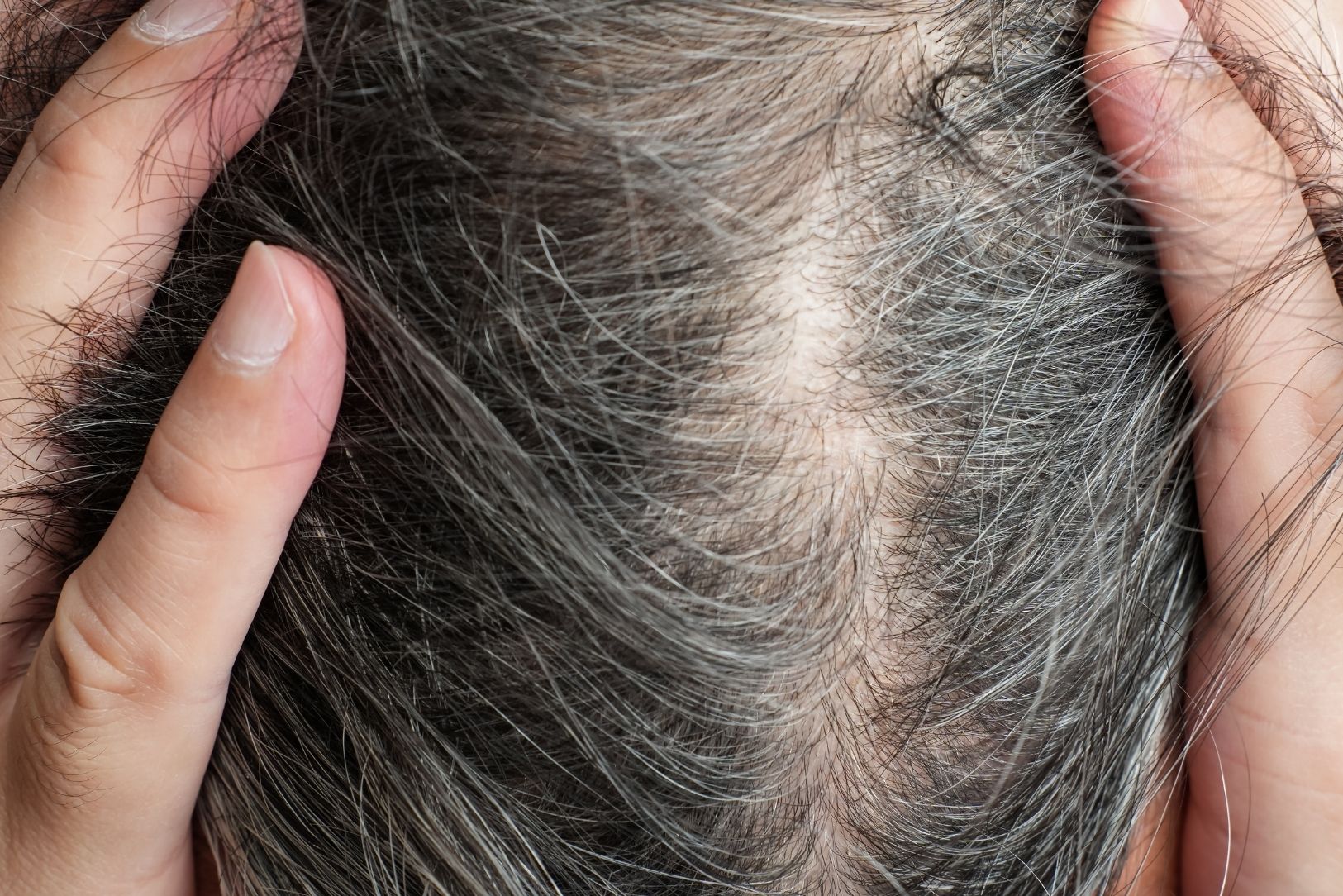
Male pattern hair loss is the most common form of permanent hair loss in men, developing due to genetic and hormonal factors. It is also known as androgenetic alopecia. It usually begins with a receding hairline and thinning at the crown area. Hair follicles sensitive to the hormone dihydrotestosterone (DHT) gradually shrink and stop producing hair. With early diagnosis, hair loss can be slowed with medical or supportive treatments.
Why Does Male Pattern Hair Loss Begin?
Androgenetic alopecia is the most common form of hair loss among men and affects approximately half of the male population to varying degrees after puberty. Rather than being a “disease,” it is the result of a genetic predisposition triggered by hormonal effects.
The core of the process is miniaturization. Thick, dense hair strands gradually become thinner, weaker, shorter, and lose their color. With each hair cycle (the process of hair falling out and regrowing), the new hair strand becomes weaker than the previous one. Eventually, the hair follicle shrinks so much that it can no longer produce a visible hair strand.
Two main factors must come together for this type of hair loss to occur:
- Genetic Predisposition: Genes inherited from the family.
- Androgen Hormones: Male hormones.
What Is the Role of Genetic Inheritance in Hair Loss?
Although there is a common belief that hair loss is inherited only from the mother’s side (maternal uncles), this is not correct. Androgenetic alopecia is a polygenic inheritance; it results from the complex interaction of multiple genes transmitted from both the mother and the father.
If your father or uncles have hair loss, your risk of experiencing it is increased at least as much as the risk associated with your maternal uncles. This genetic structure determines how “sensitive” your hair follicles will be to androgen hormones. Two men with the same hormone levels may experience different outcomes: one may lose hair while the other does not. The difference lies entirely in this genetic sensitivity.
Which Hormone Actually Triggers Hair Loss?
The main player in male pattern hair loss is a hormone called Dihydrotestosterone (DHT). DHT is actually a derivative of testosterone (the primary male hormone).
The process works as follows: An enzyme in the body called “5-alpha reductase” (5-AR) converts testosterone into DHT. This DHT hormone then travels through the bloodstream to the hair follicles. If a person is genetically predisposed, the receptors in hair follicles—especially in the crown and frontal areas of the scalp—are highly sensitive to this DHT hormone.
DHT binds to these receptors like a key fitting into a lock and essentially sends a “shrink” signal to the hair follicle. This signal shortens the hair’s growth phase (anagen phase) and prolongs the resting phase (telogen phase). The hair strand quickly enters the resting phase before reaching its full potential and falls out. The new hair strand that replaces it is weaker than the previous one. This vicious cycle leads to miniaturization and eventually baldness.
How Are the Stages of Hair Loss Classified?
A globally accepted classification system is used to determine the severity and type of hair loss. This system is known as the Hamilton-Norwood scale and divides the progression of hair loss into seven main stages. This classification provides a roadmap both for understanding the current condition and for deciding which treatment may be appropriate.
These stages are as follows:
- Stage I: No hair loss or very slight recession of the frontal hairline.
- Stage II: Mild symmetrical triangular recession at the temples.
- Stage III: Recession at the temples becomes pronounced, and the “M” shape begins. (This stage is the first stage that may be considered for surgical treatment).
- Stage IV: Temple recession deepens and/or thinning begins at the crown (vertex).
- Stage V: The frontal and crown bald areas are still separate but the hair bridge between them becomes thinner.
- Stage VI: The bald areas in the frontal and crown regions completely merge, forming a large bald area.
- Stage VII: The most advanced stage of hair loss. Only a thin horseshoe-shaped strip of hair remains on the sides and back of the head (occipital region).
Which Examination Methods Are Used for Accurate Diagnosis?
When a patient consults a dermatologist with a complaint of hair loss, the diagnostic process begins with taking a detailed patient history (anamnesis). Questions include when the hair loss started, how rapidly it progressed, whether there is a similar condition in the family, and whether there are any accompanying health problems.
Following the physical examination, one of the most valuable methods for establishing a definitive diagnosis and clarifying the cause of hair loss is a digital imaging technique called trichoscopy (hair dermoscopy).
What Information Does a Trichoscopy Examination Provide About Hair Loss?
Trichoscopy is a completely painless, quick, and practical method in which the scalp and hair follicles are examined under a special microscope (dermoscope) with magnification and polarized light. This examination reveals details that cannot be seen with the naked eye and allows us to clearly identify the underlying cause of hair loss.
In the diagnosis of male pattern hair loss (AGA), trichoscopy shows the following specific findings:
- Variation in hair shaft diameter (Anisotrichosis): This is the most important and earliest sign of AGA. It indicates the presence of both thick, healthy hair strands and severely thinned, weak hair strands affected by DHT within the same area.
- Increased vellus hair ratio: Normally present in small numbers on the scalp, the increase of short, thin, and colorless vellus hairs indicates the progression of miniaturization.
- Peripilar sign: Brown ring-shaped pigmentation seen around some hair follicles. This is one of the specific findings indicating that the active hair loss process is ongoing.
- Yellow dots: The appearance of hair follicle openings that have completely emptied and no longer produce hair strands.
Trichoscopy is invaluable not only for diagnosis but also for monitoring treatment effectiveness. If follow-up trichoscopy performed 6–12 months after starting treatment shows objectively that thinning hairs are beginning to thicken (i.e., the variation in hair shaft diameter is decreasing), this is the clearest evidence that the treatment is working and that the right path has been chosen.
Is Every Hair Loss Male Pattern Hair Loss?
No, it is not. Hair loss can have many different causes, and these causes must be distinguished before starting the correct treatment. The main conditions that may be confused with male pattern hair loss (AGA) include:
- Telogen Effluvium: Diffuse and usually temporary hair loss that occurs after serious illness, surgery, high fever, intense stress, or nutritional deficiencies (such as iron, B12, vitamin D, or zinc deficiency).
- Alopecia Areata: Sudden hair loss caused by the immune system attacking hair follicles, usually appearing as coin-shaped, sharply defined bald patches.
- Tinea Capitis (Scalp Fungus): A fungal infection typically seen in children but also possible in adults, characterized by inflammation of the scalp, dandruff, and broken hair.
- Cicatricial (Scarring) Alopecias: In conditions such as lichen planopilaris, hair follicles are permanently damaged and hair will never grow again in that area. These conditions require completely different treatment and urgent intervention.
Are There Oral Medications That Stop Hair Loss?
Yes, there are scientifically proven and FDA-approved oral medications that target the primary hormonal cause of male pattern hair loss. These medications prevent the production of the DHT hormone that causes hair loss.
The most important point about these treatments is this: Their effects continue only as long as the medication is used. This is a treatment that requires a “lifelong commitment.” When the medication is discontinued, DHT production returns to normal and the hair loss process resumes from where it left off (usually within 1–2 years), causing all gains to be lost.
How Does Finasteride Treatment Work?
Finasteride is a prescription treatment considered the “gold standard” for male pattern hair loss. It is used in tablet form at a dose of 1 mg per day.
Finasteride selectively blocks the “Type II 5-alpha reductase” enzyme that converts testosterone into DHT. In doing so, it reduces the level of the DHT hormone that damages hair follicles in the blood and scalp by approximately 70%. This removes the “shrinkage” pressure on hair follicles.
Because of the slow nature of the hair cycle, patience is required to see the effects of finasteride. Continuous use for at least 6 to 12 months is necessary to notice the slowing of hair loss and to observe new hair growth (more precisely, the thickening of previously thinned hairs).
Contact Us for Anything You Wonder About Skin Health!
What Are the Possible Side Effects of Finasteride Treatment?
Since finasteride is a systemic medication, it may cause certain side effects in a small percentage of men who use it. Being transparent about this issue is very important so that the patient can make an informed decision about treatment. Most reported side effects are related to sexual functions.
- Decreased sexual desire (loss of libido)
- Erectile dysfunction
- Decrease in semen volume
These side effects occur in approximately 1–2% of users and usually resolve completely after discontinuing the medication.
Although rare, some users may report persistent sexual, cognitive (such as brain fog), or psychiatric side effects even after stopping the medication. This condition is called “Post-Finasteride Syndrome” (PFS), and its mechanism is still being researched in the medical field. This low risk should be thoroughly discussed with a dermatologist before starting treatment, and the risk–benefit balance should be evaluated individually.
Is Dutasteride Treatment Different from Finasteride?
Dutasteride belongs to the same family of drugs (5-ARI) as finasteride but is much more powerful. The difference between them is as follows:
- Finasteride: Blocks only the Type II 5-AR enzyme.
- Dutasteride: Blocks all three known 5-AR enzyme types (Type I, II, and III).
Thanks to this broad-spectrum effect, dutasteride (usually taken at a dose of 0.5 mg/day) reduces DHT levels in the blood far more than finasteride (up to approximately 99%).
Clinically, this means dutasteride may be more effective than finasteride in stopping hair loss and increasing hair density. It is a strong treatment option especially for patients who do not respond adequately to finasteride or who have very aggressive hair loss. However, because it suppresses DHT almost completely, it may carry a somewhat higher risk in terms of potential side effects and therefore requires closer monitoring.
Why Is PSA Test Monitoring Important While Using These Medications?
This is vital information that every man using finasteride or dutasteride must know. These medications artificially affect the results of the Prostate-Specific Antigen (PSA) blood test used for prostate cancer screening.
Since these medications also treat benign prostate enlargement, they reduce PSA levels by approximately 50%. This situation may mask a possible risk of prostate cancer.
Therefore, if you undergo a urology examination or PSA test while using one of these medications, you must inform your doctor that you are taking it. For accurate evaluation, the PSA result obtained in the laboratory must be multiplied by 2. Measuring a baseline PSA level before starting treatment is also considered good practice.
Which Treatments Are Available for Those Who Do Not Want to Use Oral Medication?
For patients who are concerned about the possible side effects of systemic medications or who are not suitable for using them, topical treatments applied directly to the scalp are also available.
How Does Minoxidil (Spray or Foam) Treatment Work?
Minoxidil is the first medication approved by the FDA for hair loss treatment and has no effect on hormones. It works through a completely different mechanism than finasteride.
Although the exact mechanism of action of minoxidil has not been fully clarified, it is generally believed to dilate the blood vessels in hair follicles (vasodilation) and stimulate and prolong the active growth (anagen) phase of hair. In this way, it prevents early transition to the resting (telogen) phase and helps stimulate miniaturized follicles.
Which Form of Minoxidil Treatment (5% or 2%) Is More Effective?
In the treatment of male pattern hair loss, clinical studies have clearly shown that the 5% minoxidil formulation is significantly more effective and produces faster results than the 2% formulation. It has been reported that the 5% solution provides approximately 45% more hair growth compared to the 2% solution.
Minoxidil is available on the market in solution (spray) or foam form. The solution form may cause scalp irritation, itching, dryness, or allergic reactions in some individuals due to a carrier substance called “propylene glycol.” In such cases, switching to the foam form, which usually does not contain this substance and is better tolerated, can resolve the problem.
Why Does Minoxidil Not Work in Some People?
This is a common situation in treatment and is often thought to be due to the patient “using the medication incorrectly,” but the real cause may be genetic.
Minoxidil is actually a “prodrug.” This means it is inactive when applied to the skin. It must be converted into its active form, “minoxidil sulfate,” by an enzyme called SULT1A1 found in the hair follicle. The active form performs the therapeutic effect.
Some people genetically have very low levels or no SULT1A1 enzyme in their hair follicles. Even if these individuals use minoxidil regularly and correctly, the medication cannot be converted into its active form, so they do not respond to treatment. If no progress is observed during trichoscopic examination after 6 months of regular use, this condition may be suspected, and switching to alternative treatments (such as 5-ARI or LLLT) may be more reasonable.
What Are the Side Effects of Minoxidil Treatment?
Side effects are generally local, meaning they are limited to the area of application.
- Itching
- Dandruff
- Dryness
- Allergic contact dermatitis (especially related to the solution)
Increased hair growth (hypertrichosis) on the face or unwanted areas. This may occur if the medication transfers to the pillow during sleep or is absorbed into the bloodstream.
Do Device-Based Treatments Work for Hair Loss?
In addition to medication treatments, or for patients who prefer not to use them, certain device-based and clinical applications designed to stimulate hair follicles are also available.
How Does Laser Therapy (LLLT) Work for Hair Loss?
LLLT (Low-Level Laser Therapy) is a safe and effective method approved by the FDA for male pattern hair loss. Also known as “cold laser,” this method uses devices applied in clinical settings or used at home in the form of helmets, caps, or combs.
These devices emit red or near-infrared light with wavelengths between 600–950 nm. This light energy penetrates deep into the skin and creates a cellular stimulation known as “photobiomodulation” in hair follicles.
LLLT works independently of hormones (similar to minoxidil). Its main effect is stimulating mitochondria, the “power plants” of hair follicle cells. In this way, it increases cellular energy production (ATP), stimulates follicles to enter the anagen (growth) phase, and prolongs the duration of this phase.
The parameters of LLLT treatment are generally as follows.
- Application frequency: 3 sessions per week
- Session duration: Approximately 15–25 minutes
- Light used: Red / near-infrared (600–950 nm)
- Side effects: No serious side effects have been reported; it is a safe method.
LLLT can be used as a standalone treatment option, but it usually provides the best results when combined with primary treatments such as finasteride and/or minoxidil. This synergistic effect significantly increases the success rate by targeting both the hormonal hair loss pathway (with 5-ARI) and the hair growth cycle pathway (with LLLT/Minoxidil) simultaneously.
Contact Us for Anything You Wonder About Skin Health!
Is PRP Treatment Different from Laser Therapy?
PRP (Platelet-Rich Plasma) treatment is a different method from LLLT. While LLLT is a non-invasive light therapy, PRP is an injection-based procedure.
In PRP treatment, the patient’s own blood is drawn and processed with a special procedure (centrifugation) to separate the plasma portion rich in platelets—cells responsible for clotting and wound healing. This plasma, which is very rich in growth factors, is then injected into the scalp with small needles.
Although both methods aim to stimulate hair growth, the painless and needle-free nature of LLLT may make long-term treatment adherence easier for some patients compared to repeated injections that may cause discomfort.
Is Hair Transplantation a Permanent Solution?
Hair transplantation is an effective surgical method used especially in patients whose hair loss has been controlled with medical treatments or who have advanced-stage hair loss according to the Hamilton-Norwood scale, to restore aesthetic density and the frontal hairline.
Today, the most common and modern technique is the FUE (Follicular Unit Extraction) method. In this method, hair follicles taken from the donor area at the back of the head—which are genetically resistant to hair loss—are individually extracted with special micromotors and transplanted into the thinning or bald areas. The FUE technique is highly preferred due to its minimally invasive nature, high graft survival rates, and natural-looking results, leading to high patient satisfaction.
What Complications May Occur After Hair Transplantation?
When performed by experienced specialists, the FUE procedure is a safe operation with a very low complication rate. However, like any surgical procedure, some temporary and manageable side effects may occur.
- Edema: Swelling in the forehead and face area seen in the first few days after the procedure (most common).
- Folliculitis: Small pimple-like inflammations of hair follicles that may occur both in the transplant area and in the donor area.
- Temporary loss of sensation: Temporary numbness or reduced sensation, especially in the donor area (nape).
- Itching: Itching in both the donor and transplant areas as part of the healing process.
Can Medication Be Stopped After Hair Transplantation?
This is the most critical and important information that patients considering hair transplantation should know. The answer is clearly: NO.
Let us explain why: Hair follicles used in transplantation are taken from the back of the head. These follicles are genetically resistant to the DHT hormone. In other words, they are coded not to fall out for life in their new location.
However, hair transplantation does not treat your ongoing hair loss process. Your own original hairs surrounding the transplanted area (especially those in the crown and mid-scalp regions) are still sensitive to DHT and will continue to fall out according to their genetic program.
If protective medical treatments such as finasteride or minoxidil are discontinued after transplantation, the transplanted hairs will remain in place while the surrounding original hairs continue to thin and fall out. Over time, this can lead to an unnatural appearance in which transplanted hair remains like isolated patches.
For this reason, continuing medical treatment (especially 5-ARI medications) is essential to maintain long-term aesthetic success, preserve harmony between transplanted and existing hair, and delay the need for a second transplantation.
What Are the Golden Rules for Success in Hair Loss Treatment?
Managing male pattern hair loss is not a sprint but a lifelong marathon. Success in this process depends on correct diagnosis, appropriate treatment, and the patient’s commitment.
For successful treatment, the following points should be remembered.
- Patience: Regardless of the treatment chosen, it takes at least 6–12 months to see visible results due to the hair growth cycle.
- Consistency: Medical treatments (medications, sprays) are effective only while they are used. If treatment stops, hair loss resumes.
- Realistic Expectations: The primary goal of treatments is to stop or slow hair loss. The secondary goal is to thicken thinning hair. New hair growth should not be expected from completely bald and shiny scalp areas.
- Combined (Multimodal) Approach: The best results are usually obtained by combining treatments. Targeting both the hormonal pathway (such as with finasteride) and the hair growth cycle (such as with minoxidil or LLLT) maximizes the chances of success.
- Informed Decision: Before starting treatment, the potential benefits and risks of each option (medication, laser, transplantation) should be openly discussed with a dermatologist, and the most appropriate roadmap should be determined together.
- Specialist Monitoring: The treatment process should always proceed under the supervision of a dermatologist. Regular follow-ups with trichoscopy are the best way to objectively evaluate whether the treatment is working and to update the treatment plan if necessary.
Frequently Asked Questions
What causes male pattern hair loss?
Male pattern hair loss develops due to genetic predisposition and sensitivity to androgen hormones. A hormone called dihydrotestosterone (DHT) shrinks hair follicles and gradually causes hair loss.
At what ages does male pattern hair loss begin?
Although it usually begins in the late twenties, it may also appear in some men after adolescence. The progression rate of hair loss varies depending on genetic factors and hormone levels.
Does stress affect male pattern hair loss?
Although stress is not a direct cause, it may accelerate hair loss by disrupting the hair follicle cycle. It can also slow the hair regrowth process, making existing hair loss more noticeable.
Is male pattern hair loss permanent?
This type of hair loss is usually permanent because hair follicles do not lose their sensitivity to DHT. However, with appropriate treatments, hair loss can be slowed and regrowth may occur in some areas.
Which medical treatments are used for male pattern hair loss?
Finasteride and minoxidil are the most commonly used medications. These drugs prevent the shrinking of hair follicles and support new hair growth by prolonging the growth phase. Treatment requires continuity.
How effective is hair transplantation for male pattern hair loss?
Hair transplantation is a surgical option that provides permanent results. Hair follicles resistant to hair loss from the back of the head are transplanted into thinning areas. The results are usually natural and long-lasting.
What can be done to prevent male pattern hair loss?
Early dermatological examination, starting appropriate medical treatments, PRP, mesotherapy, and exosome injections, along with healthy nutrition, are important. Stress control and reducing smoking and alcohol consumption can also slow hair loss.
How does male pattern hair loss affect people psychologically?
Hair loss may cause decreased self-confidence and social anxiety. Especially in young men, depression and self-image problems may occur. Psychological support and aesthetic solutions can help ease this process.
Do hormonal imbalances increase male pattern hair loss?
Yes, changes in testosterone metabolism and increased DHT levels accelerate hair loss. Certain endocrine diseases or medications may also affect the process by disrupting hormonal balance.
How long does it take to see results in male pattern hair loss treatment?
In medical treatments, noticeable results are generally seen within 4–6 months. After hair transplantation, new hair growth begins from the 6th month, and full results appear within 12–18 months.
How Long Does Male Pattern Hair Loss Treatment Take?
Male pattern hair loss treatment requires long-term and regular application. Treatments such as topical minoxidil and oral finasteride usually begin to show effects within 3–6 months. However, it is recommended to continue treatment for at least 12 months for noticeable results.
Which Department or Doctor Should Be Consulted for Male Pattern Hair Loss?
For male pattern hair loss (androgenetic alopecia), the dermatology (skin diseases) department should be consulted. Dermatologists may recommend topical minoxidil, oral medications, or supportive treatments such as PRP depending on the severity of hair loss.
Is there a treatment for male pattern hair loss?
There are treatments that slow down hair loss and protect existing hair in male pattern hair loss. The process can be controlled with methods such as medical medications, mesotherapy, and hair transplantation.
How is male pattern hair loss treated in women?
In women, treatment is planned according to the underlying hormonal causes. Hair loss can be reduced with topical medications, hormone-balancing treatments, and supportive hair therapies.
What are the symptoms of male pattern hair loss?
Thinning and receding hair at the temples and crown area are the most typical symptoms. Over time, the hairline recedes and hair density noticeably decreases.
Can male pattern hair loss be reversed?
Although it is difficult to completely restore it to its previous state, treatments started early can slow hair loss and thicken existing hair.
Does male pattern hair grow back?
Lost hair follicles do not regrow on their own. However, follicles that are still alive can be strengthened with appropriate treatments and the appearance of hair can improve.
When does male pattern hair loss stop?
Male pattern hair loss is usually a progressive process and does not completely stop. If untreated, it may continue to increase over the years.
Can hair regrow in women with male pattern hair loss?
In hair loss detected at an early stage, hair can become stronger again. However, recovery may be limited in areas where hair loss has continued for a long time and follicles are lost.
Which hormone is used for male pattern hair loss in women?
Hormone-regulating medications that suppress androgen effects may be used in treatment. The appropriate hormone should always be determined after a doctor’s evaluation.
Is there a herbal treatment for male pattern hair loss in women?
Herbal products may support hair health but are not sufficient as a standalone treatment. It is more appropriate to use them as supportive methods alongside medical treatments.